
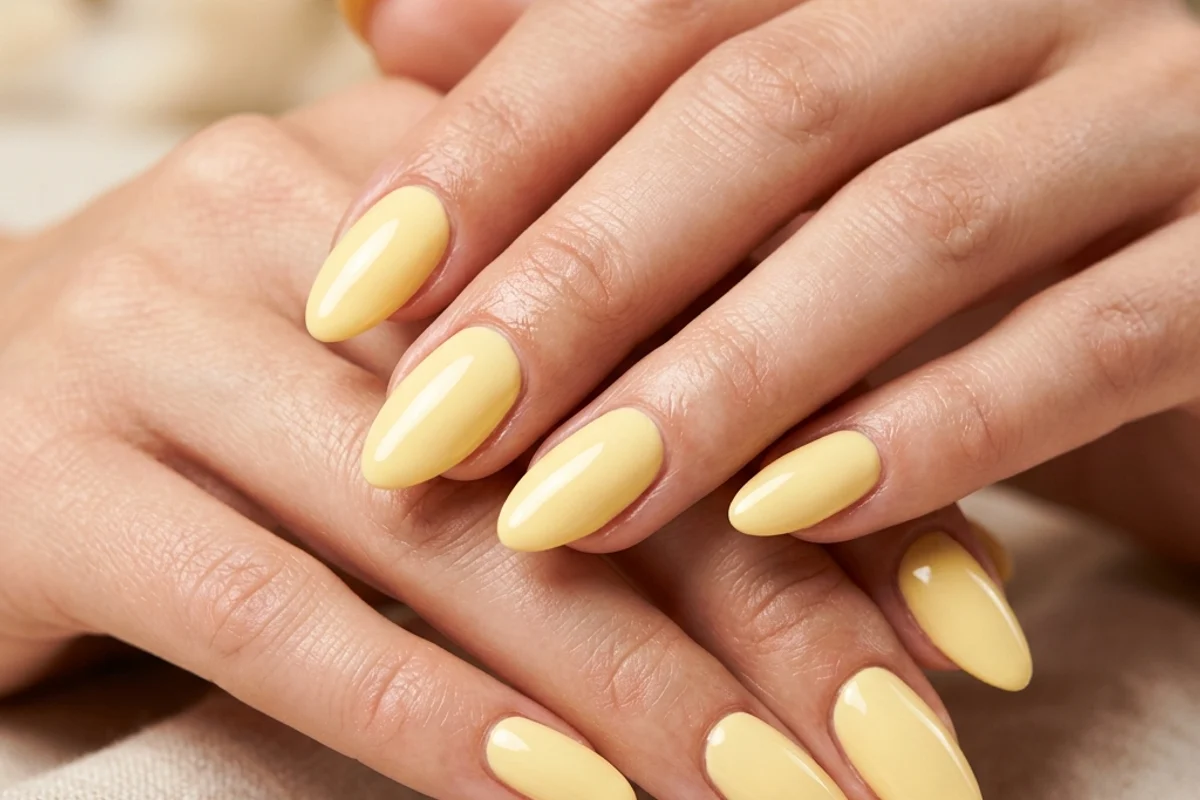
Butter Yellow Nails: The Soft, Creamy Color of the Season
I'll be honest with you — yellow has never been the easiest shade to sell in the salon. For years, clients would flinch at the idea. Too bold. Too neon. Too risky. But butter yellow nails? That's a whole different conversation. This shade is soft, creamy, and surprisingly wearable. It's the kind of color that makes people do a double take and ask, "Wait, what shade is that?"
I've been seeing butter yellow nails everywhere lately — on runways, on my Instagram feed, and increasingly on my own appointment books. It's become one of those universally flattering colors that somehow works on every skin tone, every nail shape, and every season. If you haven't tried it yet, or you've been hesitant to recommend it to clients, let me walk you through everything I've learned about this gorgeous trend.
What Exactly Is Butter Yellow?
Think of butter yellow as the lovechild of a warm pastel and a rich cream. It's not the bright, almost-neon yellow you'd see on a highlighter. And it's not the pale, almost-white yellow that can wash out certain skin tones. It sits right in the middle — warm, soft, and saturated enough to actually read as yellow on the nail without being aggressive about it.
The best butter yellow nails have a slightly warm undertone, almost like real melted butter. Some formulas lean a touch more golden, while others pull a bit more peachy. That warmth is what makes the shade so flattering — it doesn't fight against the natural pink or warm tones in most people's skin. It just blends beautifully.
Here's what I tell clients who are nervous: if you can wear cream, ivory, or champagne near your face, you can absolutely rock butter yellow. It's in that same soft, warm family.
Why Butter Yellow Nails Are Trending Right Now
There are a few reasons this shade has exploded, and it's not just because of one celebrity post or one runway show.
- Soft color palettes are dominating fashion. Think butter yellows, soft lavenders, sage greens, and powder blues. People are gravitating toward colors that feel gentle and approachable rather than loud and in-your-face.
- It photographs incredibly well. I can't tell you how many clients come in wanting something that looks good in photos. Butter yellow nails catch light beautifully without creating that harsh glare you sometimes get with brighter shades.
- It's a year-round shade. Unlike some pastels that feel strictly spring, butter yellow works in summer, pairs gorgeously with fall earth tones, and adds a cheerful pop during those gray winter months.
- It flatters literally every skin tone. I've done this shade on the fairest clients and the deepest complexions, and it looks stunning on all of them. That's rare for any color, let alone a yellow.
How to Get the Perfect Butter Yellow Manicure
Now here's where my technician brain kicks in. Butter yellow is one of those deceptively tricky shades. Because it's soft and somewhat translucent by nature, you really need the right technique and product to get that smooth, even, creamy finish. Let me break it down.
Choosing the Right Formula: Pastel Yellow Gel vs. Regular Polish
Personally, I always recommend a pastel yellow gel for butter yellow nails. Here's why: pastel yellows are notorious for being streaky. The pigment load in a yellow polish is inherently less opaque than, say, a deep red or a black. With regular polish, you're often looking at three or four coats, and even then, you might get visible brush strokes.
A high-quality pastel yellow gel gives you:
- Better opacity in fewer coats (usually two thin coats does the trick)
- A smoother, self-leveling finish that hides imperfections
- Longer wear — we're talking two to three weeks without chipping
- That gorgeous, slightly glossy, almost buttery sheen that makes the color look rich and dimensional
If a client is set on regular polish, I'll use a ridge-filling base coat first and suggest they come in for a fresh coat every five to seven days. But gel? That's my go-to recommendation for the soft yellow manicure trend every time.
Prep Work Matters More Than You Think
With any light, creamy shade, your prep work is everything. Butter yellow won't hide a thing. If there's uneven texture on the nail plate, if your base coat is uneven, or if there's any moisture left on the nail, you'll see it through the color.
- Push back and clean up cuticles thoroughly. Any dead skin near the nail bed will cast shadows that show through a light shade.
- Buff the nail plate gently. You want a smooth, even surface. I use a 180-grit buffer — just enough to remove shine without thinning the nail.
- Apply a thin, even base coat and cure fully. Don't rush the cure. An under-cured base coat can cause yellowing or uneven color payoff.
- Wipe the nail with a lint-free pad and alcohol. This removes any tacky residue and ensures the color layer bonds properly.
Application Tips for a Flawless Finish
When I'm applying butter yellow gel, I follow a specific process that I've fine-tuned over dozens of sets:
- Thin coats are non-negotiable. I know it's tempting to load up the brush to get full coverage in one swipe, but thick coats cause bubbling, uneven curing, and that awful wrinkled texture. Thin and even — every single time.
- Cap the free edge with every layer. This seals the color and prevents premature tip wear. With a light shade like this, even a tiny chip is noticeable.
- Cure between each coat. Full cure, full lamp time. I use a 48W LED lamp and cure for 60 seconds per coat. No shortcuts.
- Two coats usually does it. If the formula is good, two thin coats will give you that opaque, creamy look. If you're seeing VNL (visible nail line) after two, go for a third thin coat. Don't try to fix it by making the second coat thicker.
- Finish with a no-wipe top coat. I love a glossy top coat for butter yellow nails. It gives that rich, almost lacquered look. Matte top coat can work too if you're going for a more editorial vibe, but the glossy finish really makes the color sing.
Best Butter Yellow Nail Art Ideas
One of the things I love most about butter yellow is how versatile it is as a base for nail art. Here are some of my favorite combinations that clients have been requesting:
- Butter yellow with white French tips. A modern, ultra-soft take on the classic French. Clean and elegant.
- Butter yellow with tiny floral accents. Think hand-painted daisies or abstract floral swirls in white and soft green. Perfect for spring and summer.
- Butter yellow ombré with champagne glitter. I blend a butter yellow base into a champagne or gold glitter fade near the cuticle. It's subtle but absolutely gorgeous.
- Mix-and-match pastels. Butter yellow paired with soft lavender, mint green, and baby pink on alternating nails. Each finger gets a different pastel, and butter yellow ties it all together.
- Butter yellow with gold foil accents. A few flakes of gold leaf on one or two accent nails. It's minimal but looks incredibly luxe.
- Abstract swirls in brown or terracotta over butter yellow. This is a gorgeous fall option. The warm tones complement each other perfectly.
What to Look for in a Pastel Yellow Gel
Not all pastel yellow gels are created equal, and trust me — I've tested my fair share. Here's what I look for when I'm stocking my salon:
- Opacity. If it's sheer after two coats, it's not the one. You want a formula that builds to full coverage quickly.
- Self-leveling properties. The gel should smooth itself out as it settles, filling in minor imperfections without you having to fuss with it.
- True-to-bottle color. Some yellows shift once cured — they can go more green, more orange, or more pale. Always test a swatch on a tip before committing to a full set.
- No discoloration. Cheap yellow gels can yellow even further over time (ironic, I know) or develop a weird greenish tint. Invest in a professional-grade formula.
- Easy removal. You want something that soaks off cleanly without staining the natural nail yellow. That's a dealbreaker for me.
Pairing Butter Yellow Nails with Your Wardrobe
Clients always ask me, "But what do I wear it with?" Honestly, butter yellow nails go with way more than you'd expect:
- Neutrals: White, beige, tan, camel — butter yellow looks incredible with a neutral wardrobe. It adds just enough color without clashing.
- Denim: Any shade of blue denim, from light wash to deep indigo, pairs beautifully with butter yellow.
- Earth tones: Olive green, rust, terracotta, chocolate brown — warm, autumnal shades love this color.
- Other pastels: Lavender, blush pink, soft coral — if you're into a pastel palette, butter yellow fits right in.
- Gold jewelry: This is the metallic pairing that works best. Gold accessories and butter yellow nails are a match made in heaven.
Common Mistakes to Avoid
Let me save you some frustration. Here are the pitfalls I see with butter yellow nails:
- Skipping the base coat. Always use one. It prevents staining and gives the gel something to grip onto for longer wear.
- Applying too thick. I said it before, and I'll say it again. Thick coats ruin everything with pastel yellow gel. Patience pays off.
- Not matching your lamp. If your gel formula calls for a specific lamp wattage, use it. An underpowered lamp leads to under-cured gel, which means peeling, lifting, and color shift.
- Choosing a shade that's too cool-toned. If the butter yellow leans too icy or too pale, it can wash out lighter skin tones and look chalky on deeper ones. Stick with that warm, slightly golden undertone.
- Neglecting top coat maintenance. If you want that buttery, glossy finish to last, advise clients to apply cuticle oil daily and avoid harsh chemicals without gloves.
Butter Yellow Nails: Worth the Hype?
Absolutely, yes. As someone who's been doing nails professionally for years, I've seen trends come and go. But butter yellow nails feel different. They're not just a trend — they're a genuinely flattering, versatile, beautiful color that I think is going to stick around. It's the kind of shade that makes people fall in love with color again, especially if they've been stuck in a nude-and-neutral rut.
If you haven't added a pastel yellow gel to your collection yet, I'd say now's the time. Find a warm, creamy formula, perfect your application technique, and start recommending it to clients. Once they see it on their hands, they'll get it. Butter yellow doesn't just look pretty — it makes you feel good. And that's what a great manicure is all about.
Frequently Asked Questions
Do butter yellow nails look good on all skin tones?
They really do. The key is choosing a butter yellow with a warm, slightly golden undertone rather than a cool or icy yellow. That warmth is what makes it universally flattering. If your client has a deeper complexion, the shade practically glows against their skin — it's stunning.
How many coats of pastel yellow gel do I need?
With a good-quality professional formula, two thin coats should give you full, even coverage. If the gel is on the sheer side or you're working over a darker natural nail, a third thin coat might be necessary. Never apply thick coats to try to speed things up — it causes curing issues.
Will butter yellow stain my natural nails?
A quality gel formula with a proper base coat underneath shouldn't cause staining. Always use a base coat, and make sure you're curing each layer fully. If you notice any yellow tint after removal, a light buffing and a nail brightening treatment will take care of it.
Is butter yellow appropriate for a professional setting?
Totally. It's soft, clean, and polished. It reads as a neutral in many settings — more interesting than a basic nude but still completely workplace-appropriate. It's one of those colors that looks intentional and put-together without being distracting.
What's the difference between butter yellow and pastel yellow?
They're in the same family, but butter yellow is specifically warmer and slightly richer than a standard pastel yellow. Pastel yellow can sometimes lean cool or very pale. Butter yellow has that creamy, almost golden warmth that gives it more depth and makes it more wearable across skin tones.