HEMA-free gel polish is a useful label to understand, especially when you are comparing formulas or trying to make more informed choices about UV/LED nail products. But it is a formulation statement—not a personal clearance letter. A bottle described as HEMA-free may not contain HEMA as declared, yet it can still contain other (meth)acrylate ingredients, require precise curing, and cause problems if uncured product reaches the skin. The most practical approach is to read the exact ingredient list, use a compatible curing system, and treat any skin reaction as a reason to stop experimenting rather than simply switch bottles.
HEMA-free is a formula claim, not a universal safety ranking
HEMA is shorthand for 2-hydroxyethyl methacrylate, commonly listed as Hydroxyethyl Methacrylate on an ingredient declaration. It is one methacrylate monomer in the wider family of chemistry often discussed as acrylates or (meth)acrylates in the nail world. These ingredients are used in UV/LED gel systems that form a coating after the product is cured. A formula can use HEMA for particular performance characteristics, but an ingredient’s role depends on the complete formulation rather than one name alone.
HEMA matters because it is a recognized contact sensitizer, and exposure to uncured (meth)acrylate products can be a concern. That does not mean every person who uses a product containing HEMA will have a problem, and it does not identify the cause of any particular rash, itch, or nail-area change. It does explain why a precise HEMA-free claim has become relevant to many shoppers.
What a HEMA-free claim can reasonably tell you
When supported by the current ingredient declaration, HEMA-free should mean that Hydroxyethyl Methacrylate is not listed in that particular formula. It is worth checking the exact item rather than assuming a claim applies across every shade, base coat, builder gel, top coat, or regional version in a brand’s range. Formula updates can also change an ingredient declaration.
That is the limit of the claim. HEMA-free does not mean that a gel is acrylate-free, free of all methacrylates, hypoallergenic, appropriate for every skin history, or universally safer than every formula containing HEMA. It is also not a no-reaction guarantee. The remaining ingredients, the cure system, the amount applied, accidental skin contact, and an individual’s history all still matter.
- It does not prove that no other sensitizing ingredient is present.
- It does not make a product suitable by default for someone already sensitized to a nail-product ingredient.
- It does not compensate for curing an incompatible system or curing gel that has touched the skin.
- It does not turn a vague marketplace listing into a fully disclosed formula.
How to verify the exact ingredient list
The words on a product thumbnail are not enough for an ingredient-led purchase. Verify the bottle or product you would actually use. A color gel, rubber base, builder product, gel glue, and top coat are separate formulas; a HEMA-free claim on one does not automatically carry over to the others in the manicure.
- Identify the exact product. Note the brand, product type, shade or collection, and the country or retailer version being sold.
- Find the current ingredient declaration. Prioritize a clear image of the bottle or carton, an official brand page, or current manufacturer documentation over a retailer headline.
- Check for the exact HEMA name. Look for Hydroxyethyl Methacrylate and, where a chemical-style declaration is used, 2-Hydroxyethyl Methacrylate.
- Read beyond one word. Other (meth)acrylates can remain in a HEMA-free formula. Their presence does not invalidate the HEMA-free claim, but it does mean the formula is not acrylate-free.
- Save the information. Keep a screenshot or photo of the ingredient list and curing directions for products you buy. This is useful if the formula changes or you later need to discuss a reaction with a clinician.
Ingredient names that include the letters “HEMA” can create confusion. For example, Di-HEMA Trimethylhexyl Dicarbamate is a different ingredient name from Hydroxyethyl Methacrylate. Do not assume that a similar-looking name answers a medical compatibility question, or that it proves what a brand intends its marketing claim to cover. If that distinction matters to your purchase, ask the manufacturer directly and request a written answer about the exact formula.
| What you see | What it can establish | What it does not establish | Best next step |
|---|---|---|---|
| “HEMA-free” on the listing or bottle | The seller is making a claim about HEMA in that formula. | That all acrylates are absent, or that the product suits every user. | Match the claim to the current ingredient declaration for the exact item. |
| Hydroxyethyl Methacrylate on the ingredient list | HEMA is declared in that listed formula. | How a particular person will respond or whether the product will perform well. | Do not treat that item as HEMA-free; compare only documented formulas. |
| Another methacrylate or acrylate ingredient is listed | The formula still uses broader (meth)acrylate chemistry. | Whether it is interchangeable with HEMA or clinically suitable for a previously sensitized person. | For a reaction history, seek clinician guidance instead of name-matching at home. |
| “Hypoallergenic” wording | Only that the brand is using a separate marketing claim. | Which monomers are excluded, how the product should be cured, or that reactions cannot occur. | Read the full ingredients and technical directions anyway. |
| No ingredient list, only “professional formula” or “low odor” | Very little about the formula itself. | HEMA status, complete ingredient disclosure, or lamp compatibility. | Request current documentation or choose a product with clearer disclosure. |
| “LED/UV compatible” without a named cure system | That the product is marketed for lamp curing. | That any lamp, wattage, flash light, or cure time is appropriate. | Use the product maker’s stated lamp and cure instructions. |
Why marketplace disclosures deserve extra scrutiny
Marketplace listings can be useful for price and availability, but they are often a weak place to make a formulation decision. A listing may use a copied description, show a generic bottle image, group several shades under one page, omit the back-label panel, or retain information after a formula update. None of those issues proves that a product is poor quality. They do mean the page may be insufficient for someone trying to verify one specific ingredient.
Marketing red flags to pause on
- A bold HEMA-free badge with no ingredient list anywhere on the page or package image.
- Claims that a gel is suitable for everyone, regardless of past reactions or application method.
- Ingredient information that is cropped, unreadable, contradictory, or different across official and retailer pages.
- A seller who will not identify the cure instructions or compatible lamp for the product.
- Broad phrases such as “clean,” “gentle,” or “non-toxic” used instead of ingredient-specific information.
Questions worth asking before you buy
Ask questions that can produce usable documentation, not a broad reassurance. “Is this okay for sensitive skin?” invites an answer that may be vague and cannot assess your history. These questions are more specific:
- Can you provide the current full ingredient declaration for this exact base, color, builder, or top coat?
- Does this formula contain Hydroxyethyl Methacrylate or 2-Hydroxyethyl Methacrylate?
- What does your HEMA-free claim mean when the ingredient list includes similarly named but distinct ingredients?
- Has this formula been reformulated, and does the bottle image reflect the current stock?
- Which lamp model or product-maker-approved lamp is intended for this formula, and what cure instructions apply to each layer?
- Is there official technical information available in addition to the retail listing?
A safety data sheet can be useful supporting documentation, but it is not automatically a complete cosmetic ingredient declaration. Its format and purpose differ from a consumer-facing ingredient list. If the information remains incomplete, it is reasonable to pass on that product rather than fill in the gaps with assumptions.
Ingredient awareness still needs controlled application and compatible curing
A thoughtful label choice cannot correct an uncontrolled application. The practical goal with any UV/LED gel is to keep uncured material on the nail plate and out of contact with surrounding skin. This applies to base coats, color, builder products, gel glue, and top coats—not only to the most visibly pigmented layer.
Use the cure system specified for the product
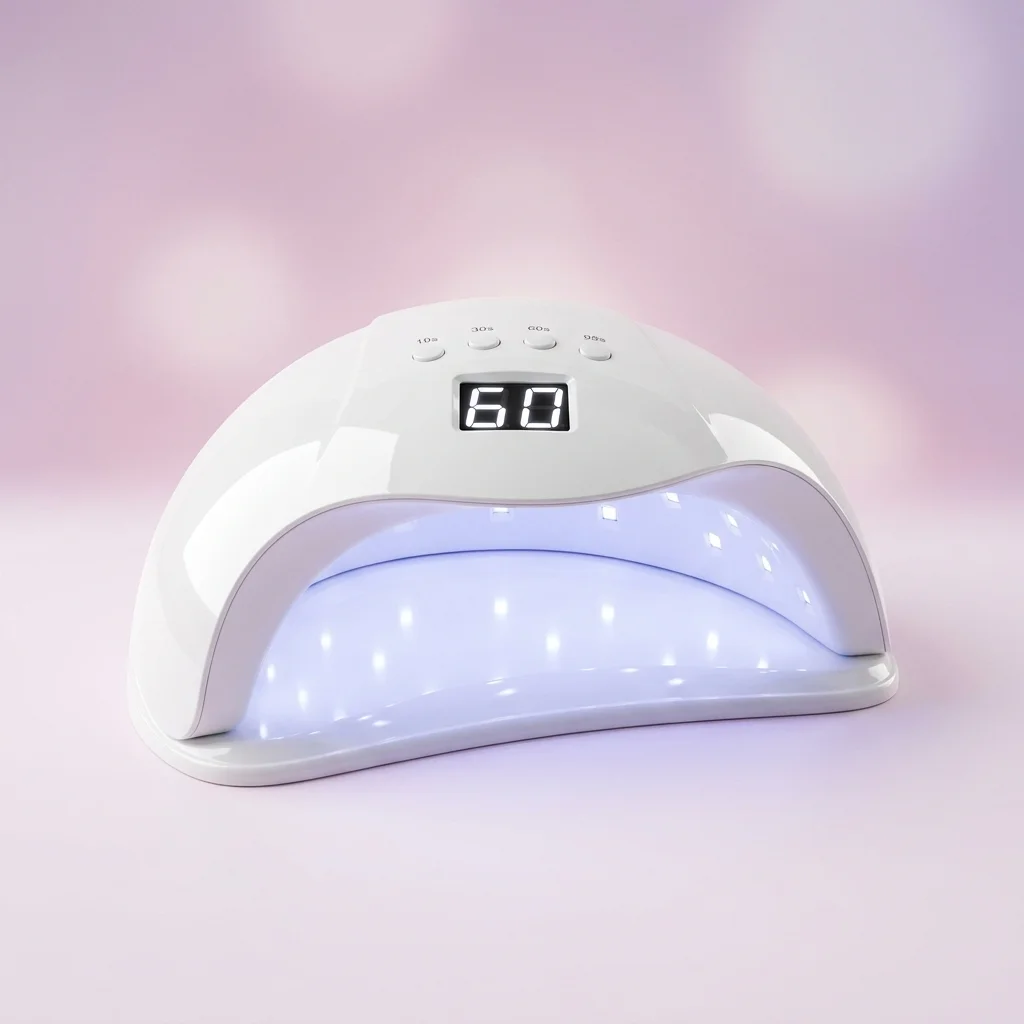
UV/LED labels are not a promise that every lamp is interchangeable. Cure requirements depend on the formula, pigment level, layer thickness, lamp design, and the photoinitiator system selected by the maker. Wattage alone cannot establish compatibility. Use the lamp and timing identified by the product maker, and follow separate instructions where a base, color, builder layer, and top coat have different directions.
Apply controlled, thin layers within the product’s stated instructions. Thick application can make it harder to follow the intended cure guidance, particularly with opaque colors and structured gel products. A small flash-curing light should not be substituted for the final cure unless the product system specifically says it can be. Likewise, a tacky surface can be a normal inhibition layer in some systems; it is not a reason to improvise a cure schedule. Follow the maker’s instructions for that finish.
If you are building your equipment setup from scratch, our gel nail starter-kit guide can help you organize the core tools around manufacturer directions. It does not replace the cure instructions for an individual gel formula.
Make skin-contact prevention part of every layer
Before curing, check the cuticle line, sidewalls, and free edge for overflow. Keep the product slightly shy of the skin rather than trying to paint every millimeter of nail. If gel reaches skin, remove that skin contact promptly before cure using the product maker’s cleanup directions, then reassess the edge before placing the hand in the lamp. Do not cure gel on the skin in an attempt to tidy it later.
Stop immediately rather than curing through painful or significant heat, burning, or irritation. Remove your hand from the lamp, discontinue that application, and do not add more product to cover the issue. Heat or irritation is not something to diagnose from a distance, but it is a clear signal not to continue exposure.
- Read the instructions for every product in the system before beginning.
- Set out cleanup materials specified by the maker before opening the gel.
- Apply one controlled layer at a time and inspect the nail before each cure.
- Use the stated lamp, hand position, and cure duration for that formula.
- Keep bottles closed when not in use and clean product from tools as directed.
- Remove gel according to the product maker’s removal directions rather than peeling or picking it away.
If your skin reacts, stop testing gels and seek appropriate advice
Itching, burning, redness, swelling, blistering, peeling, or changes around the nail can have more than one cause. A label comparison cannot diagnose what happened. If you notice a reaction during or after using a gel product, stop using that product and do not keep trying additional gels to see whether another bottle feels different. Avoid applying uncured gel to skin as a test.
If there is uncured product on the skin, use the product maker’s stated cleanup process before curing. If a product has already been cured, do not peel, scrape, or aggressively manipulate the area. Follow the maker’s removal directions where appropriate, and seek medical advice when symptoms are persistent, significant, recurrent, or concerning. Painful blistering, marked swelling, a spreading rash, face or eye involvement, or trouble breathing warrants prompt medical attention; breathing difficulty or rapidly developing facial swelling should be treated as an emergency.
A dermatologist or allergy specialist can evaluate a suspected contact reaction and decide whether formal patch testing is appropriate. Clinical patch testing uses standardized materials and professional interpretation; it is not the same as a home skin test with gel polish. Bring or photograph the exact product names, ingredient lists, product types, lamp information, and the order in which products were used if you seek care. For someone with an existing or suspected sensitization, HEMA-free is not permission to resume gel use without professional guidance.
Frequently asked questions
Does HEMA-free mean acrylate-free?
No. HEMA is one methacrylate ingredient. A HEMA-free gel can still contain other methacrylates, acrylates, oligomers, or related components used in UV/LED nail systems.
If an ingredient name contains “Di-HEMA,” does that mean the product contains HEMA?
It is a distinct ingredient name, not the same label entry as Hydroxyethyl Methacrylate. Do not rely on word similarity to make a personal compatibility decision; ask the manufacturer what its claim covers and discuss a reaction history with a clinician.
Can I use HEMA-free gel if I have reacted to gel before?
Do not assume that you can. Stop using gel products and seek advice from a dermatologist or allergy specialist rather than trialing different formulas. A prior reaction needs professional assessment, not a shopping-label workaround.
Should I patch test gel polish on my skin before using it?
No. Do not apply uncured gel polish to skin for a home patch test. If testing is needed after a reaction history, a clinician can determine whether formal testing is appropriate.
Will any LED lamp cure a HEMA-free formula?
No. HEMA status does not determine lamp compatibility. Use the lamp and cure instructions specified for the exact product system, and do not choose a lamp based on wattage or “LED/UV” wording alone.
What should I do if a listing does not show ingredients?
Request the current full ingredient declaration from the manufacturer or authorized seller. If you cannot obtain clear information for the exact product, choose a formula with better disclosure.
The practical takeaway
HEMA-free is a meaningful ingredient claim when it is backed by the current label for the exact gel you plan to use. It is not a blanket statement about every acrylate ingredient, every lamp, or every person. Shop for transparent disclosures, confirm cure compatibility, keep uncured gel off skin, remove accidental contact before cure using the maker’s directions, and stop rather than push through painful heat or irritation. If a reaction has occurred, pause gel use and let a qualified clinician guide the next step.