Peel-off bases promise no-soak removal and zero damage. We break down how they really work and when to use them.
Okay, let's talk about something that's been blowing up my DMs lately: peel off gel base coats. Every other week, a client walks in waving her phone at me, showing me some TikTok where someone just peels their gel polish off in one clean sheet like it's nothing. "Can you do that? Will it wreck my nails?"
I get it. The idea of damage free gel removal sounds almost too good to be true. Soak-off removal takes forever, smells like a chemistry lab, and if you're impatient (like most humans), you end up prying and scraping. No bueno. So when a product promises you can just peel your gel off like a sticker? Yeah, that's gonna get attention.
But here's the thing — I've been testing peelable gel polish formulas behind the chair for over two years now. I've tried the good, the bad, and the "why does this exist" versions. And I'm gonna give you my honest, no-fluff breakdown of whether a peel off gel base coat actually deserves a spot in your kit.
What Exactly Is a Peel-Off Gel Base Coat?
A peel off gel base coat is exactly what it sounds like — a base layer you apply before your gel color that cures under UV/LED light but doesn't bond permanently to the natural nail. Instead of chemically adhering to the nail plate the way a traditional gel base does, it creates a slick barrier between your nail and the color above it. When you're ready for removal, you literally lift an edge and peel the whole thing off in one piece.
The science is actually pretty straightforward. Traditional gel base coats contain adhesion-promoting monomers that grip onto the keratin in your nail plate. Peelable formulas use different polymer chains that cure hard but maintain a weak bond at the nail surface. Think of it like the difference between super glue and a Post-it note — both stick, but one lets go on command.
How to Apply a Peel Off Gel Base Coat (The Right Way)
Here's where most people mess up. If you just slap a peel off gel base coat on like a regular base, you're gonna have a bad time. Application technique matters a lot with these products. Here's my step-by-step:
- Prep the nail plate gently. Push back cuticles and lightly buff the surface with a 180-grit file. You want a smooth, clean canvas — but don't go overboard. Over-buffing actually makes the peelable base grip harder, which defeats the whole purpose.
- Cleanse with alcohol or a dehydrator. Remove all dust and oils. This step is non-negotiable.
- Apply a thin, even coat of the peelable base. Keep it off your cuticles and sidewalls. If the base touches skin, it'll lift prematurely or peel unevenly. Thin is the keyword here — thick coats get goopy and don't cure properly.
- Cure fully. Follow the manufacturer's cure time exactly. I usually do 60 seconds LED. Under-cured base = messy peeling later.
- Apply your gel color and top coat as normal. Build your manicure on top of the cured peelable base just like you would with any other base coat.
That's it. The rest of your gel application doesn't change one bit.
The Honest Pros of Peelable Gel Polish
Damage Free Gel Removal — When Done Right
This is the big one. When you peel off a gel manicure that was applied over a peelable base, there's zero scraping, zero soaking, and zero acetone on your natural nail. I've pulled off sets that were two weeks old, and the nail underneath looked exactly like it did before the service. No white spots, no thinning, no rough patches. For clients who are recovering from damaged nails or who are just paranoid about nail health, this is a massive win.
Speed of Removal
Traditional soak-off takes 10 to 15 minutes per hand if you're doing it properly with foil wraps. A peel off gel base coat? I can remove a full set in under three minutes. For busy clients and busy techs, that time savings adds up fast — especially during back-to-back appointments.
Great for Short-Term Wear
If a client wants a killer gel set for a weekend event but doesn't want to commit for two to three weeks, peelable gel polish is the perfect solution. Wedding guest nails, vacation manicures, costume looks, photo shoots — all ideal use cases. Get the look, enjoy it, peel it off Monday morning.
Ideal for Nail Biters and Nail Growers
I've recommended peelable bases to clients who are growing out their nails and can't stand having gel on as it grows out. They can wear it for a few days, peel it off, do a quick maintenance session, and reapply. Way less stressful on fragile, growing nails.
The Real Cons (Because Nothing's Perfect)
They Don't Last as Long
Let's be real — a peel off gel base coat will never give you the same wear time as a traditional base. Where I regularly see two to three weeks from a standard gel base, peelable bases tend to start lifting or popping off around the one-week mark. Sometimes sooner if the client is hard on her hands. If you're someone who expects a solid two-week manicure, this will probably frustrate you.
Water Is the Enemy
Peelable bases are way more vulnerable to water exposure. Long showers, dishwashing without gloves, swimming — all of these weaken the already-light bond between the peelable base and the nail plate. I've had clients come back after three days because half their manicure peeled off in the pool. You really need to commit to wearing gloves for cleaning and keeping hands as dry as possible.
Uneven Peeling Can Still Cause Issues
Here's one people don't talk about enough. If the peelable base was applied unevenly or too thick in spots, it won't peel off in a clean sheet. You'll get chunks coming off at different rates, and some spots might require gentle nudging with an orangewood stick. That's not the end of the world, but it's not the magical peel-and-go moment you see on Instagram either. Proper application (see above) minimizes this, but it's still a risk.
Limited Brand Compatibility
Not every peel off gel base coat plays nicely with every gel color line. I've had some combinations where the color layer separated from the peelable base during wear, almost like the two layers weren't bonding to each other. You might need to experiment with pairings. In my experience, using the same brand's color line over its own peelable base tends to work best.
Who Should Use a Peel Off Gel Base Coat?
Based on my experience, here's who I think benefits most:
- People with thin, damaged, or recovering nails who want gel color without any risk of further damage.
- Nail artists and techs doing temporary designs, swatching, or editorial work that needs to come off quickly.
- Clients who change their nails frequently — like every four to seven days — and don't want to soak off every time.
- Event-specific manicures where you want the look for a few days max.
- Nail biters transitioning to healthier habits who want some color protection without long-term commitment.
Who Should Probably Skip It?
- Hardworking hands. If your client types all day, does manual work, or can't avoid water exposure, a traditional base is still the way to go.
- Clients who want two to three weeks of wear. Don't set unrealistic expectations — peelable bases are a short-term game.
- Anyone using builder gel or structured overlays. Peelable bases aren't designed for structural support. Stick with a hard base for that.
My Favorite Peelable Gel Polish Bases Right Now
I've tested a bunch. Here are the ones I actually reach for:
- UNT Ready for Takeoff Peelable Base Coat — One of the originals and still one of the best. Affordable, reliable, and gives a clean peel in most conditions. Works great under most gel color brands I've tried.
- Gelish Structure Peel Off Base — A little thicker, so it's better for clients who want a tiny bit of added strength under their color. Not a builder gel by any means, but it gives a slightly more "finished" feel.
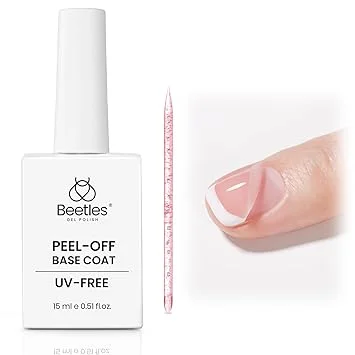
- Beetles Peel Off Gel Base — Budget-friendly and available in big sets. I keep this one on hand for clients who want a quick weekend set. Solid peel, minimal fuss.
Final Verdict: Are Peel-Off Gel Base Coats Worth It?
Yes — with a major asterisk. A peel off gel base coat is not a replacement for your standard base coat. It's a specialty product for specific situations. If you go in understanding that you're trading longevity for convenience and damage free gel removal, you'll be happy with the results. If you're expecting it to perform exactly like a traditional gel base and last two weeks without issues, you're gonna be disappointed.
I keep a peelable gel polish base in my kit at all times. I don't use it for every client, but when the situation calls for it — a quick set, a nail rehab situation, a creative experiment — it's an absolute lifesaver. And my clients love knowing that when they're done, their natural nails will look exactly like they did before the service.
That's a win in my book.
Frequently Asked Questions
Will a peel off gel base coat damage my natural nails?
When applied and removed correctly, no. That's the whole point. Since there's no soaking in acetone and no scraping, your natural nail plate stays intact. Just make sure you're peeling gently and not forcing anything off. If a spot doesn't want to come up, use a bit of cuticle oil and an orangewood stick to ease it off.
How long does peelable gel polish actually last?
In my experience, expect five to ten days depending on the brand, application quality, and how rough the client is with her hands. Water exposure is the biggest factor that shortens wear time.
Can I use a peel off gel base coat under any gel polish brand?
Mostly yes, but results vary. Some color formulas adhere better to certain peelable bases than others. I always recommend testing a combination before offering it to a client, especially if you're mixing brands.
Is peelable gel polish the same as regular peel-off nail polish?
Nope. Regular peel-off polish (like the water-based kind) doesn't require a UV/LED lamp. A peel off gel base coat cures under light and sits underneath a full gel system. They're different products with different formulas.
Can I use a peelable base with dip powder or acrylic?
I wouldn't recommend it. Peelable bases are formulated specifically for gel systems. Using them under dip or acrylic won't give you the same clean-peel result and could cause unpredictable lifting or bonding issues.