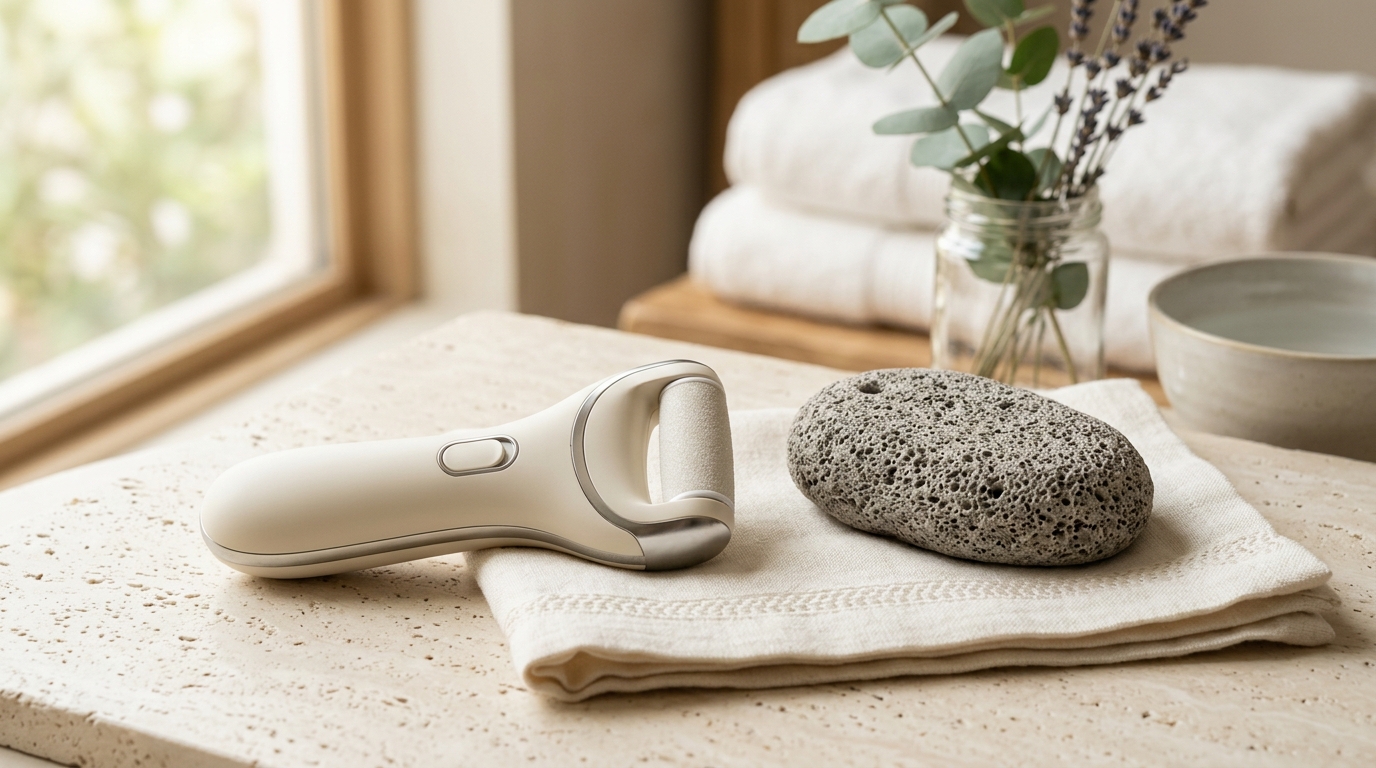
An electric foot file and a pumice stone can both smooth superficial roughness on intact skin. The difference is mostly in how each tool creates friction, how much upkeep it requires, and which format feels practical for your personal-care routine. For cosmetic use, the goal is a softer-looking, smoother-feeling surface—not perfectly polished heels.
A cosmetic-care boundary
Foot files and pumice stones are grooming tools, not treatments for foot conditions. Skip at-home abrasion and seek qualified medical or podiatric guidance if you have diabetes, neuropathy, poor circulation, reduced sensation, open wounds, signs of infection, bleeding, deep cracks, or unexplained pain. The same applies to a changing, unusually dark, or persistently painful spot.
For healthy adults using these tools on intact skin, conservative technique matters more than choosing the most abrasive option. Stop if an area becomes tender, stings, feels hot, looks pink, or appears raw. A rough patch can wait for another day; irritated skin should not be filed again.
The practical differences
| Consideration | Electric foot file | Pumice stone |
|---|---|---|
| How it works | A motor turns an abrasive roller or head across superficial roughness. | A textured stone is moved by hand over superficial roughness. |
| What you control | Pressure, contact time, placement, and the number of passes. | Pressure, direction, pace, placement, and the number of passes. |
| Routine fit | Suited to someone comfortable following device-specific instructions and maintaining removable parts. | Suited to someone who prefers a simple manual tool with minimal setup. |
| Wet or dry use | Use only in the conditions stated by the manufacturer. Not every device is intended for water exposure. | Check the product directions. Some stones are used on damp skin, while directions vary by product. |
| Cleaning and storage | Clean the roller, head, and collection area as directed; dry components before storing. | Rinse away residue, let the stone dry fully in an airy place, and keep it for personal use. |
| Replacement needs | Rollers, heads, batteries, or charging components may need replacement depending on the model. | Replace when the stone is damaged, worn, persistently odorous, or no longer cleanable. |
| Cost considerations | The initial purchase and replacement parts can vary by device and retailer. | The tool itself is generally a straightforward, low-commitment purchase. |
What each tool asks of you
Electric foot files
An electric foot file usually has a rotating abrasive roller or disc. The motor supplies the movement while you guide the tool over the skin. That changes the task, but it does not remove the need for care. You still decide where the roller touches, how long it stays there, how firmly you hold the device, and whether the area needs any additional passes.
That makes an electric file a reasonable option for someone who prefers a powered format and can follow the instructions that come with a particular model. Device details are not interchangeable. A file may have specific directions about charging, cleaning, roller installation, use on dry or damp skin, and whether the body of the device can be rinsed. Read those directions before the first use rather than assuming that all rechargeable foot tools work alike.
The important technique point is simple: keep contact light and brief. Do not press the roller into the heel or hold it in one place while waiting for a dramatic change. Lift the tool away regularly and look at the skin in good light. If you are unsure whether to continue, stop. Moisturizer and time are more appropriate next steps than increasing pressure.
Pumice stones
A pumice stone is a textured abrasive tool used entirely by hand. Natural pumice and manufactured versions can differ in shape, density, texture, and durability, so the label and care directions still matter. The basic method is the same: use gentle rubbing on an intact rough area, then pause to assess the result.
A manual format may appeal if you want a tool without a charger, removable roller, or device-specific setup. It also gives you full responsibility for movement and pressure. That is not a promise that pumice is automatically milder. A stone can irritate skin if it is used with force, used repeatedly over the same area, or applied to delicate skin.
Think of pumice as a maintenance tool, not a cure for every rough spot. It is best reserved for ordinary, superficial texture on areas such as the outer heel, provided the skin is intact and comfortable. Avoid using it on bony areas, tender skin, peeling skin, cuts, or anything that does not look like routine dryness.
How to choose without overbuying
Start with the format you are realistically willing to use and care for. If you want a basic tool with no charging or replacement-head system, a pumice stone may be the more natural fit. If you prefer a motorized tool and do not mind reading instructions, cleaning components, and checking whether replacement rollers are available, an electric file may fit your routine.
Neither choice needs to be framed as a permanent commitment. A simple tool that is used occasionally and cleaned properly is more useful than a complicated device that stays in a drawer. Before purchasing an electric file, look for clear instructions covering power, cleaning, intended conditions of use, compatible replacement parts, and storage. Before purchasing a pumice stone, look for a shape you can hold comfortably and directions that explain how to rinse and dry it.
Avoid treating surface roughness as a problem that requires the harshest possible tool. Coarser-looking abrasives, extra attachments, or aggressive marketing language do not tell you whether a product is right for your skin. The most sensible choice is the one that lets you work gradually, stop easily, and maintain the tool in a clean condition.
If you are deciding between the two because of hand comfort or mobility, choose the option you can hold securely and use without straining. Good lighting, a stable seated position, and an unhurried approach matter more than any feature list. If you cannot comfortably see or reach the area you intend to file, do not improvise.
Wet, dry, clean, and stored: the care rules that matter
Wet-versus-dry guidance is product-specific. An electric file should be used only as its manufacturer directs. Do not assume a device is appropriate for shower use because it is rechargeable or because another model is marketed for wet/dry use. Keep charging cords, plugs, docks, and other electrical components away from water unless the manufacturer expressly says otherwise.
Pumice directions also vary. If a product is intended for damp use, use it only as instructed; if it is intended for dry use, follow that guidance instead. There is no universal rule that every pumice stone belongs in the shower, and there is no cosmetic benefit to adding extra rubbing simply because skin is damp.
Cleaning and drying belong to the same routine as use. For an electric file, switch the device off, remove or empty parts only if the instructions permit it, and clean the roller, head, or dust compartment as directed. Let washable components dry before reassembly or storage. If a roller is damaged, visibly worn, or cannot be cleaned, replace it. When a manufacturer gives an explicit replacement recommendation, follow it.
For a pumice stone, rinse away visible residue after use and place it where air can circulate. Do not leave it sitting in pooled water, seal it into a damp container, or store it in a closed shower caddy before it has dried. Keep a pumice stone for your own use rather than sharing it. Replace it when its surface is breaking down, it remains difficult to clean, develops a persistent odor, or no longer seems suitable for use.
Storage does not need to be elaborate. A dry cabinet, drawer, or ventilated holder is enough for most tools. The point is to avoid storing a wet item where it cannot dry and to protect electric devices from moisture. If you travel with an electric file, make sure the device is switched off and packed according to its instructions.
A restrained smoothing checklist
- Look first. Use good lighting and start only with clean, intact skin. Skip any area with cuts, bleeding, open skin, marked redness, drainage, deep cracks, or pain.
- Use the right conditions. Follow the product’s instructions for dry or damp use. Do not take a powered device near water unless that exact model is designed for it.
- Work on ordinary roughness only. Focus on a superficial, non-tender patch such as the heel edge. Avoid delicate areas, bony prominences, and skin that already feels sensitive.
- Use light contact. With an electric file, guide the roller lightly and lift it away often to check the area. With pumice, use a few gentle passes rather than forceful scrubbing.
- Stop before irritation. Do not continue until the skin is pink, hot, sore, or burning. The target is a modestly smoother feel, not total removal of every thickened area.
- Moisturize intact skin afterward. Apply a foot cream if you like the feel and finish it provides. This is a cosmetic finishing step, not a reason to add more abrasion.
- Clean, dry, and put the tool away. Follow the device instructions for electric components; rinse and air-dry pumice. Do not leave either tool wet between uses.
- Give the area a break. There is no universal schedule for filing. Revisit only when superficial roughness returns and the skin is comfortable.
For related guidance on keeping an at-home pedicure simple and sanitary, see our safe at-home pedicure routine.
What tends to derail a simple routine
The most common mistake is treating foot smoothing like a one-session transformation. Rough heels often tempt people to keep filing after the skin has already had enough. More passes do not necessarily create a better cosmetic result, and tenderness is a clear reason to stop.
Another mistake is using a tool without understanding its care requirements. An electric file with unclear cleaning directions, unavailable replacement heads, or an uncertain wet-use rating may not be a practical purchase. Likewise, a pumice stone left damp and uncleaned is not ready for the next session. Choose products with instructions you can follow, then make care part of the habit.
Do not use blades, razors, or cutting callus removers as a substitute for gentle cosmetic smoothing. Cutting tools fall outside a conservative at-home approach. Also avoid trying to file away a corn, wart, painful callus, deeply split heel, or unfamiliar lesion. If the issue is painful, persistent, or unexplained, it is not a DIY filing project.
A few useful questions before you start
Can I use both an electric file and a pumice stone?
You do not need both for one session. Layering abrasive tools can make it harder to notice when you have done enough. If you own both, choose one tool for a given routine and keep the technique conservative.
Should feet be perfectly smooth after filing?
No. Cosmetic foot care does not require a uniformly polished result. A smoother surface and a comfortable feel are sufficient reasons to stop. Chasing an ultra-smooth finish can lead to unnecessary friction.
How do I know when to replace an electric roller?
Check the manufacturer’s instructions first. Replace a roller or head when the brand directs you to do so, and sooner if it is damaged, visibly worn, or no longer cleanable. Do not continue using a component that has deteriorated just to delay a replacement purchase.
Can I use a foot file on a painful rough patch?
No. Pain changes the situation from routine cosmetic care to something that deserves professional evaluation, particularly when the cause is unclear.
Choose the tool you can use gently
A pumice stone is the straightforward manual choice: it has no power source, no device settings, and few parts to manage. An electric foot file is the powered choice: it requires attention to contact time, cleaning instructions, storage, and any replacement components. Both can belong in a conservative grooming routine for intact, comfortable skin.
Whichever format you choose, keep the standard modest. Use light pressure, stop at the first sign of sensitivity, clean and dry the tool, and leave concerns such as pain, deep cracks, numbness, bleeding, or open skin to a qualified professional.