
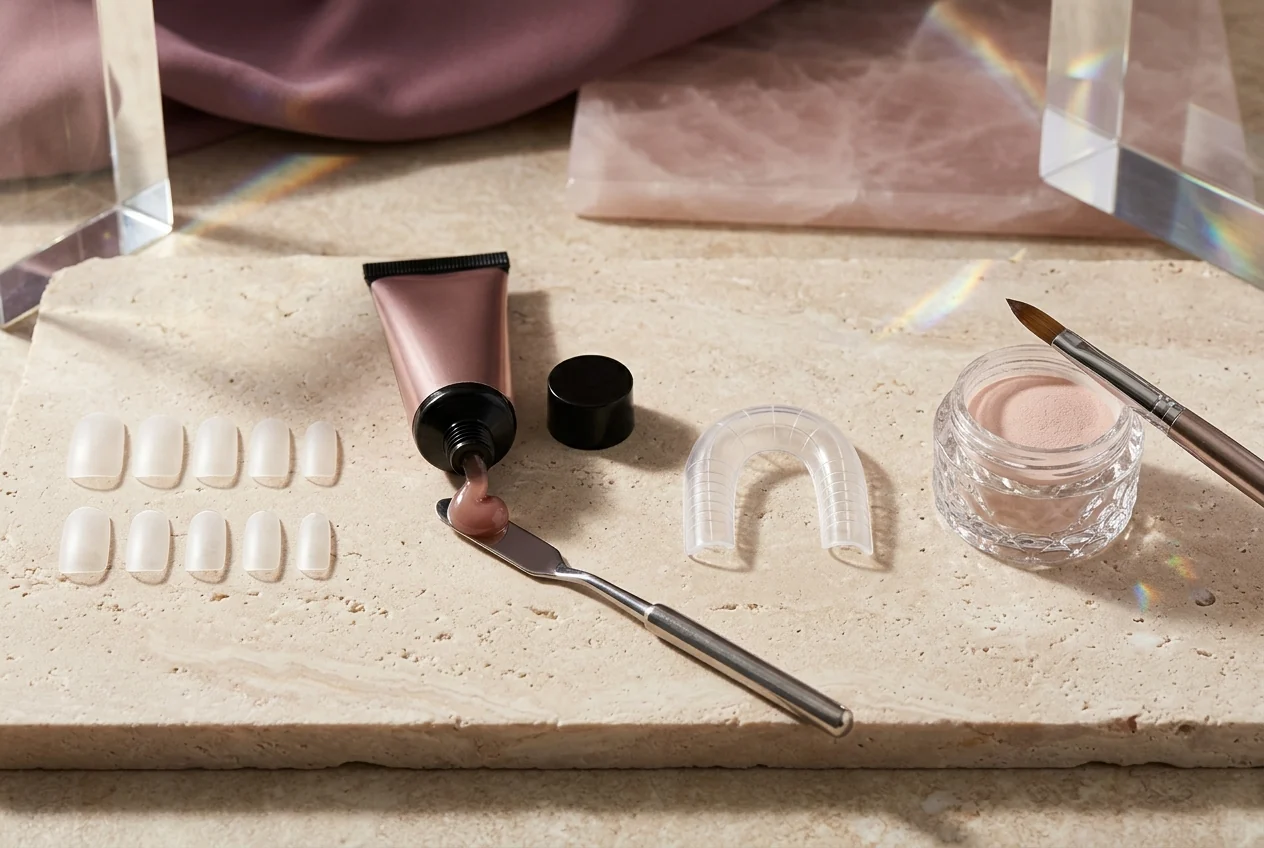
Evidence note: This guide compares four extension routes represented in regulator, medical-association, and named manufacturer sources. It is not an exhaustive list or a performance ranking. Sources were checked July 26, 2026.
This guide compares four named nail-enhancement formats with different materials and workflows. Gelish presents a pre-shaped soft-gel tip and describes its named Polygel as a tube-based sculptable enhancement. Light Elegance distinguishes a named file-off hard builder from its soak-off builder. Young Nails describes acrylic as monomer liquid and polymer powder that combine and air dry. Those disclosed differences create different purchasing and maintenance questions.
A more useful first question than “Which one lasts longest?” is: “Which complete system can I identify, use, maintain, and remove according to its current instructions?” The FDA’s nail-product overview explains that nail products are generally regulated as cosmetics and directs users to follow labeled directions and warnings. A broad category name cannot replace product-specific information.
Four extension routes at a glance
This table separates what the cited pages disclose from the questions a buyer still needs to answer. It does not assign a universal cure schedule, removal procedure, or skill ranking to any category.
| System | Supported starting format | How the named source describes customization | Cure or setting evidence | Removal evidence | Verify before buying |
|---|---|---|---|---|---|
| Full-cover soft gel tips | Pre-shaped tip covering the full nail | Tip collections offer named shapes and lengths | Aprés describes flash and full cure for its named Extend Gel Novice adhesive | Aprés makes a soak-off claim for that named adhesive system | Exact tip, adhesive, lamp, prep, and removal instructions |
| Polygel | Tube-based sculptable enhancement in the named Gelish system | Gelish’s named product is shaped rather than selected as a finished full-cover tip | No category-wide schedule inferred from the cited page | No category-wide method inferred from the cited page | The complete instructions for the exact Polygel product and its companion products |
| Hard gel | Hard builder gel in the Light Elegance Lexy Line example | The cited sources identify Lexy Line as a named hard-builder line and distinguish it from soak-off JimmyGel | No schedule transferred beyond the named system | File-off in the named Lexy Line example | Current application, maintenance, and file-off instructions for the named product |
| Acrylic | Monomer liquid plus polymer powder in the Young Nails example | A named workflow builds a bead over a form and files the set material to shape | The cited Young Nails source describes acrylic as air drying | Follow the exact acrylic system’s current service and removal instructions | Compatible liquid and powder, workspace requirements, tools, and education |
Identify the exact tip system and its instructions
The Gelish Soft Gel Short Round page provides one example of a pre-shaped, full-cover format. The Aprés Gel-X collection shows multiple shapes and lengths within another brand’s system. Together, these pages support a clear purchase distinction: much of the visible outline comes from the tip rather than being sculpted from uncured product.
They do not establish that every tip, adhesive, primer, and lamp is interchangeable. The Aprés Extend Gel Novice page describes a flash cure followed by a full cure for that named adhesive and makes a soak-off claim within the Gel-X context. Treat those as Aprés system instructions, not as a schedule for Gelish or for soft-gel tips generally. Before buying, obtain the current application and removal documents for the exact tip-and-adhesive system you plan to use.
Likewise, a collection’s number of shapes is not the same as a fit assessment. The cited collection pages establish available shapes and lengths, but they do not provide a universal fitting rule for every hand. Continue with the soft-gel tip fit guide.
Polygel: sculptable format, product-specific workflow
The Gelish Polygel page supports a narrower comparison: Gelish’s named Polygel system is described as a tube-based, sculptable enhancement rather than a ready-shaped, full-cover tip. That distinction can matter if you are deciding between selecting a manufactured outline and shaping the product yourself.
However, the closed evidence set does not establish that every product sold as Polygel uses the same form, shaping liquid, lamp, cure schedule, or removal route. Those details should come from the current instructions for the exact product and any companion products required by that system. Continue with soft gel tips versus Polygel.
For buying purposes, the key distinction is not that one format is inherently better. It is whether you want the starting shape supplied by a tip or whether you are prepared to follow the selected product’s shaping workflow. That choice should be made alongside the listed tools, compatibility requirements, maintenance expectations, and removal instructions.
Hard gel: a named file-off example
Light Elegance’s Lexy Line versus JimmyGel comparison identifies Lexy Line as a named hard-builder line and distinguishes it from the soak-off JimmyGel line. Its Lexy Line education page also identifies the named builder as hard gel.
The supported removal distinction is specific to the named products: the Lexy Line example is file-off, while JimmyGel is presented as soak-off. That makes maintenance planning part of the buying decision, but it is not a complete filing tutorial or a rule for every builder gel. Consult the exact product’s current service instructions or an appropriately trained professional rather than improvising a reduction technique. Continue with hard gel versus soft gel.
In other words, “builder” alone does not tell a buyer everything needed to plan removal. The cited Light Elegance materials show why the exact named line matters. Verify the named product’s removal category and current instructions before buying.
Acrylic: liquid and powder that air dry
Young Nails’ acrylic-versus-gel education page describes its acrylic context as monomer liquid and polymer powder that combine, air dry, and can be filed after setting. That supports the key lamp distinction: the acrylic process described there is not activated by a gel curing lamp. If a separately applied color or top coat has lamp requirements, follow that exact product’s current directions.
The manufacturer’s beginner acrylic application page lists powder, monomer, brush, dish, and files, then describes a form-based bead workflow and finish filing. It presents acrylic as a technique to learn, not simply two products to combine at random. Its comparison page also discusses workspace and odor as selection considerations. These are manufacturer education claims, not independent performance findings.
Buyers should therefore confirm that the liquid and powder are intended to work together and account for the listed tools, workspace needs, and education before ordering. The cited sources do not establish that components from different acrylic systems can be mixed, nor do they establish one universal removal method for every acrylic product.
A decision sequence that avoids overbuying
- Identify the complete named system. Find the current application, maintenance, and removal documents before ordering isolated components.
- Choose a pre-shaped or sculptable format. This separates tip inventory from product-shaping work without claiming either route is universally easier.
- Confirm setting or cure requirements. Acrylic air drying in the cited Young Nails example does not supply instructions for gel, and one gel brand’s schedule does not transfer to another.
- Plan around the disclosed removal category. A named soak-off claim and a named file-off claim call for different ownership and maintenance plans.
- Include workspace and education needs. Files, compatible components, lamps where specified, and service knowledge belong in the total purchase decision.
What the evidence cannot decide
The cited sources do not establish one universally easiest, longest-lasting, or safest extension system. They also do not predict results for an individual nail, user, or mixed-brand kit. A manufacturer page can describe its own format and instructions, but it is not an independent comparison of every competing product.
If a product lifts, resists removal, or behaves differently from its disclosed instructions, consult that exact product’s current service guidance instead of improvising a repair or procedure. The American Academy of Dermatology’s gel-manicure guidance provides general nail and skin precautions; it does not select an extension architecture or validate a mixed system.
For more evidence-led comparisons, visit the Buying Guides hub. For a separate lamp discussion, see the nail lamp wattage guide.
Sources and evidence boundary
Source pages were checked July 26, 2026. Product formulas, availability, and instructions can change, so confirm the current label and manufacturer instructions before purchase or use. FDA and AAD pages provide regulatory or consumer context. Manufacturer pages describe named systems and are not independent testing.
- U.S. Food and Drug Administration — Nail Care Products
- American Academy of Dermatology — Gel manicures
- Gelish — Soft Gel Short Round Tips
- Gelish — Polygel
- Aprés Nail — Extend Gel Novice
- Aprés Nail — Gel-X Tips
- Young Nails — Gel vs Acrylic Nails
- Young Nails — How To Do Acrylic Nails For Beginners
- Light Elegance — Lexy Line versus JimmyGel
- Light Elegance — Builder Lexy Line hard gel
Frequently asked questions
Are Gel-X and the cited Gelish soft-gel tips the same system?
No. Gel-X is an Aprés system; the cited Gelish and Aprés pages describe separate named tip systems. Do not transfer adhesive, primer, lamp, or cure instructions between them.
Which extension type is easiest for a beginner?
The cited sources do not establish one universally easiest system. Compare whether you prefer a pre-shaped tip or a sculptable material, then assess the complete instructions, tools, maintenance, and removal plan.
Do acrylic nails need a UV or LED lamp?
The Young Nails acrylic source describes its monomer-and-powder process as air drying. If a separately applied color or top coat has lamp requirements, follow that exact product’s current directions.
Can hard gel soak off in acetone?
The Light Elegance Lexy Line hard-gel example cited here is file-off, while its JimmyGel builder is described as soak-off. Verify the exact product instead of assigning either method to every builder.
Does a longer wear claim prove an extension is safer?
The cited sources do not allow a safety conclusion from a wear claim alone. Follow the exact product instructions and precautions, including its disclosed application, maintenance, and removal requirements.