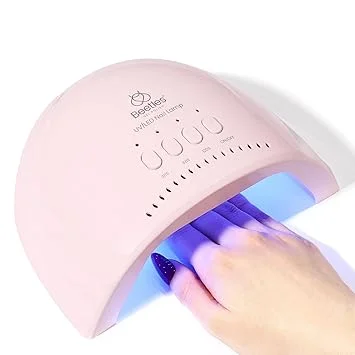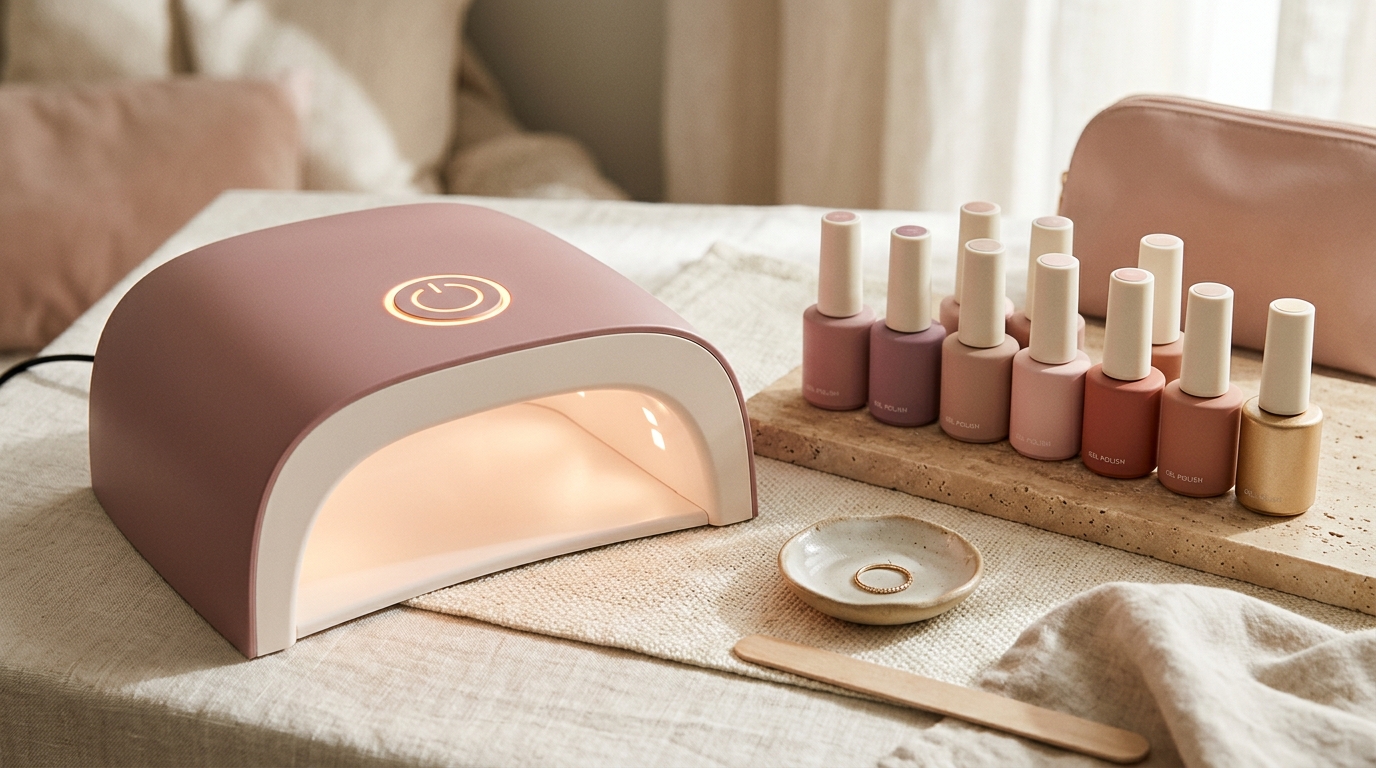
48W sounds stronger than 24W. That part is obvious. What is less obvious is that wattage tells you how much electricity a lamp consumes—not whether the light reaches every nail at the right wavelength or whether your gel system can use it.
What wattage actually measures
Wattage is electrical power draw. It describes the energy the device uses, not the amount of useful UV-range energy reaching a nail. The result depends on diode efficiency, wavelength, distance, optics, reflection, electronics, and how the manufacturer measures the number.
Some listings report theoretical LED wattage; others report wall consumption or a rounded marketing number. Unless the measurement method is clear, comparing 36W with 48W as if they were laboratory readings creates false precision.
The four specs that matter more
| Signal | What it tells you | Why it matters |
|---|---|---|
| Wavelength | Light band emitted | Must match the gel photoinitiators |
| Irradiance | Light intensity reaching an area | Helps determine exposure when measured honestly |
| Coverage/layout | Where LEDs sit around the nail | Reduces shadows at thumbs and sidewalls |
| Validated timing | Brand’s tested cure instruction | Connects lamp to formula and layer thickness |
Most consumer listings will not provide a complete irradiance map. That is not a reason to invent one. It is a reason to put more weight on manufacturer compatibility and lamp geometry.
How much wattage do you need?
There is no honest universal wattage prescription. A validated lamp for a specific gel is more useful than a generic “minimum watts†rule. For a general home shopping brief, full-size consumer lamps commonly advertise roughly 36W–54W, while mini flash lights advertise much less because they are intended for a smaller area and shorter positioning task. Those categories should not be compared as equals.
If you use a professional structured gel, follow its system instructions rather than shopping by a wattage band. If you use a consumer gel, check whether the formula names compatible wavelengths and cure time. The UV/LED lamp comparison ranks coverage and compatibility clarity above wattage.
Why a bigger number can create a worse manicure
A lamp can feel “powerful†while exposing a thick coat unevenly. Dark pigment, builder gel volume, curled fingers, dirty LEDs, and a blocked sidewall can all leave uncured material. More time or more electrical draw does not guarantee the light reaches through the layer.
Some structured gels create a noticeable heat spike as they polymerize. A higher-intensity lamp can make that sensation arrive faster. Low-heat mode may improve comfort, but it is not a substitute for thin application, correct compatibility, or stopping when heat hurts.
Wattage shopping checklist
- Does the gel brand name a lamp or wavelength?
- Does the lamp show LED placement around the sides and thumb area?
- Are the timer settings clear and compatible with the formula?
- Can you place the whole hand flat without touching the product?
- Is a lower-heat or gradual mode useful for your system?
- Are the instructions clear about full cure versus flash cure?
- Will you actually use cordless power, or is a wired lamp simpler?
Frequently asked questions
Is 36W enough for gel polish?
It may be, if the lamp is compatible with the gel and provides the required exposure. Wattage alone cannot answer the question.
Is 48W better than 36W?
Not automatically. Compare wavelength, coverage, validated timing, placement, and design before the number.
Does more wattage cure faster?
Only within a compatible system where the output and formula support that result. Never shorten a cure cycle from wattage alone.
What wattage is a mini nail lamp?
Mini lamps often advertise lower electrical draw because they cover a small area. Do not use that number to compare them with full-hand lamps.
Why wattage became the shopping shortcut
Wattage is visible, easy to compare, and familiar from household appliances. That makes it useful marketing shorthand. Gel chemistry is less visible. A customer cannot see photoinitiators, irradiance, diode efficiency, or the shadow created by a thumb at the front of a dome, so a big number becomes a stand-in for performance.
That shortcut is understandable—and incomplete. The best buying decision asks what the lamp emits and where that light lands, not only what it draws from the outlet.
Wattage, heat, and comfort
More electrical draw can be associated with stronger devices, but heat depends on the system’s electronics, ventilation, product reaction, and exposure. A lamp that feels hot at the hand is not necessarily curing well, and a low-heat mode does not make the gel compatible. Remove your hand when a heat spike hurts.
Full-size versus mini wattage
Mini lamps use less power because they cover less area. A six-watt flash lamp may be excellent at holding a rhinestone or tip temporarily and completely inappropriate for curing a full set. Compare tools inside their intended category. A car is not “worse†than a bicycle because it weighs more; they solve different jobs.
How to compare two similar lamps
- Check whether both name a compatible wavelength range.
- Compare LED placement and interior shape.
- Check timer and sensor controls.
- Look for validated gel instructions.
- Consider cleaning, cord, base, and warranty clarity.
- Only then compare advertised watts and price.
FAQ
Does 120W cure gel in half the time?
No. Do not divide a formula’s cure time by a wattage ratio.
Is lower wattage safer?
Not automatically. Correct compatibility and application matter more than a lower label.
Why do lamps advertise peak wattage?
Some sellers summarize theoretical diode draw. Without measurement conditions, comparisons can be misleading.
Bottom line
Wattage belongs in the specification row—not in the verdict headline. Compatibility, coverage, and instructions deserve the purchase decision.
Three shopping scenarios
A simple gel-polish routine
You need a compatible full-hand lamp, reliable placement, and clear timers. A reputable 36W–48W-class listing may fit, but the class name is not the reason. Choose the model whose brand documents the gel pairing.
Builder gel and extensions
Structured products add depth and can create heat spikes. Use the lamp specified by the builder system, apply the architecture the brand teaches, and use low-heat mode only as directed. Do not use wattage to improvise a cure.
Flash-curing tips
A handheld low-watt tool can hold a tip in place while you position it. Complete the final cure in the full lamp required by the adhesive system. Small-area convenience and full-depth curing are different jobs.
Why timer length does not reveal power
A 120-second button does not mean the lamp is weak, and a 30-second button does not prove it is strong. Timers are workflow presets. Their meaning comes from the gel instructions. A low-heat cycle may intentionally run longer while ramping output.
Red flags in lamp listings
- “Cures everything instantly†without wavelength or system detail.
- Extremely high wattage used as the only performance evidence.
- Mini tool shown as a full-hand professional replacement.
- No clear adapter, timer, or safety instructions.
- Claims that longer exposure fixes every formula.
Maintenance affects useful output
Keep the interior and LEDs clean using approved methods. Replace damaged adapters, stop using flickering units, and inspect diode failures. Visible light does not confirm full output. If a matched product suddenly begins failing, assess the entire lamp before extending cure cycles.
A better spec-sheet hierarchy
First: gel manufacturer compatibility.
Second: wavelength and coverage.
Third: hand placement and controls.
Fourth: cleaning, base, cord, battery, and warranty.
Last: wattage as supporting context.
Common wattage myths, corrected
“Higher wattage always cures deeperâ€
Depth depends on how much suitable light reaches through the product. Pigment and thickness can stop light even when the electrical number is large.
“Double wattage means half the timeâ€
Curing is not simple arithmetic. Follow the formula’s validated schedule.
“A low-watt lamp is saferâ€
Under-curing creates its own risk. Safety depends on compatible chemistry, application, and complete cure.
“If it shines purple, it worksâ€
Human vision cannot validate wavelength distribution or irradiance. A failing diode can still appear lit.
Buying for gel polish versus builder gel
Thin consumer gel-polish coats are a different optical challenge from a structured builder apex. A lamp marketed for polish may not be validated for a thick builder system. Read the product instructions before deciding that a common 48W label covers both.
If you plan to use extension gel, nail glue, or solid gel adhesive, confirm whether the system requires flash positioning followed by a complete cure. Do not substitute a mini lamp based on its wattage.
Buying for pedicures
A removable base and open geometry matter more than a few additional watts. Toes must sit where light reaches the nail surface without the foot pressing into uncured gel. A lamp that is comfortable for a hand can be awkward on a foot.
Questions the listing should answer
- Which wavelengths are emitted?
- Which gels or systems are supported?
- How many timer modes exist and what is low-heat mode?
- Is the base removable?
- Can the thumb lie flat in the illuminated area?
- What adapter is required?
- What warranty or support exists?
When a number looks too good
Extremely high wattage at an extremely low price deserves scrutiny. Compare physical size, adapter rating, documentation, and seller consistency. We do not accuse a listing of falsehood without evidence, but we also do not reward a claim that lacks useful context.
A final practical example
Suppose Lamp A says 36W, names the wavelength, matches your gel brand, has side LEDs and clear timing. Lamp B says 120W, claims universal curing, and provides no output detail. Lamp A is the more defensible purchase. The smaller headline contains more usable information.
What the buyer should remember
A lamp with modest wattage and clear compatibility can be a better investment than an impressive generic number. Spend the extra attention on the system you will actually use, the nails you can place correctly, and the instructions you can follow every time.
One-minute shelf check
Ignore the front-box wattage for sixty seconds. Find the lamp model, wavelength, timer table, adapter rating, interior photo, base design, and warranty. Then open the instructions for the gel you already own. If the two documents do not connect, the purchase remains uncertain regardless of the sale price.
This small check prevents the most common buying mistake: choosing a powerful-looking lamp first and trying to force every future gel into it.
Editorial standard: Specifications describe intended design, not laboratory verification. When a listing and a gel manufacturer disagree, follow the gel system or stop using the pairing. Keep product off skin and seek qualified help for persistent irritation.
The bottom line
Wattage is easy to print and easy to misunderstand. Buy the lamp that your gel system can use, that exposes the nail evenly, and that you can operate consistently. The biggest number is not the safest shortcut.