
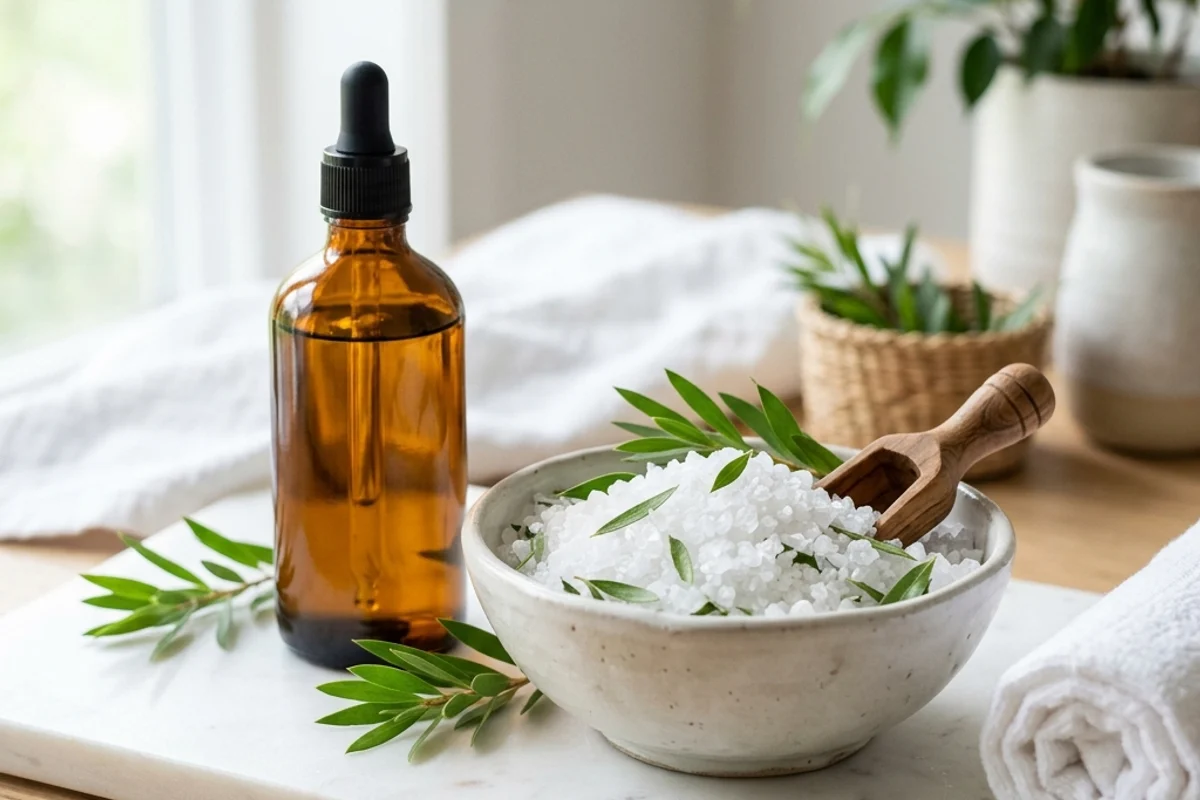
Editorial dek: This is a scent-forward Epsom salt foot soak for shoppers who enjoy tea tree, eucalyptus, and peppermint in a warm-water cosmetic ritual. The main buying questions are not whether the product can solve a foot concern, but whether you enjoy its distinctly herbal aroma, can use fragranced essential-oil products comfortably, and find the listing’s session, use-count, and storage claims practical for your routine.
The supplied listing describes a tea tree foot soak made with an Epsom salt base, tea tree oil, eucalyptus oil, peppermint oil, and dried botanicals. It presents the product as a 15- to 30-minute warm-water soak and estimates approximately 15 to 20 uses per container, with a stated shelf life of roughly 12 to 18 months after opening. Those details are useful planning points, but they are manufacturer or listing claims rather than independently verified results.
Evidence note: what this review can and cannot confirm
This is a listing-led buyer analysis, not a laboratory assessment or personal-use test. We did not test scent intensity, salt dissolution, botanical residue, skin feel, package yield, ingredient concentration, shelf stability, or any cosmetic result. We also cannot confirm that every seller carries the same formula, size, package format, or directions.
Before buying, read the live retailer listing and the current package label. Confirm the net weight, complete ingredient declaration, directions, warnings, lot or date information, period-after-opening symbol if present, and the exact amount the brand directs per soak. This matters especially with essential-oil blends, where broad front-label language such as “tea tree” or “botanical” does not tell a shopper the full formula or the concentration of each aromatic ingredient.
Scent comes first with this product type
The supplied ingredient description suggests a bracing, aromatic profile rather than a quiet spa scent. Tea tree is commonly associated with a sharp, earthy, medicinal-leaning aroma. Eucalyptus can add a cool, camphoraceous lift, while peppermint tends to bring a sweeter, greener mint note. Together, those materials point to an unmistakably herbal blend that will likely read as fresh and invigorating to some shoppers and intense to others.
That distinction is central to the purchase decision. A tea tree foot soak is not the same category as an unscented salt soak, a creamy milk soak, or a lightly perfumed floral option. Its appeal is the aromatic experience: filling a basin with comfortably warm water, adding the product as directed, and making a short cosmetic foot-care session feel more deliberate. If that type of scent is a pleasure for you, the formula concept makes sense. If eucalyptus, peppermint, tea tree, or medicinal-herbal fragrances tend to overwhelm you, the same feature can make the product a poor fit.
Shoppers should also separate “natural” or “botanical” from “low scent.” Essential oils are fragrant by nature, and dried botanicals can contribute their own herbal character even when they are not the principal fragrance source. A product can be plant-derived and still be unsuitable for someone who prefers minimal aroma, reacts to fragranced cosmetics, or simply does not want an essential-oil blend lingering in a small bathroom.
What the scent profile may suit
- People who actively enjoy tea tree, mint, eucalyptus, and fresh herbal home-spa scents.
- Shoppers who want their foot soak to feel like a distinct ritual before basic cosmetic grooming.
- Anyone who prefers an aromatic salt soak over an unscented formula.
- Gift buyers who know the recipient already likes essential-oil-based bath and body products.
When scent is a reason to pass
Skip an aromatic tea tree soak if fragrance is not a priority, if you are shopping for someone whose preferences are unknown, or if you normally choose fragrance-free personal-care products. The listing’s combination of tea tree, eucalyptus, and peppermint makes this a particularly poor blind buy for anyone who dislikes camphoraceous or medicinal-leaning notes. An unscented Epsom salt product is usually the more straightforward option when scent neutrality matters more than atmosphere.
Ingredient-label transparency matters more than broad botanical language
The supplied source names Epsom salt, tea tree oil, eucalyptus oil, peppermint oil, and dried botanicals. That is a helpful overview, but it is not a substitute for a complete ingredient label. It does not state the concentration of the oils, identify every botanical, clarify whether added fragrance is used, or explain whether colorants, preservatives, anti-caking agents, or other supporting ingredients are present.
A complete current label should be the deciding document. Look for the ingredient list, directions, warnings, and any specific guidance on dilution through basin water. If the label uses both common and INCI names, that can make comparison easier for shoppers who already know ingredients they avoid. If the listing only offers a short marketing list and no readable back-label image, consider that a transparency limitation rather than assuming the omitted details are unimportant.
Essential oils deserve particular attention. Tea tree, eucalyptus, and peppermint oils are aromatic cosmetic ingredients, but “essential oil” is not a universal signal that a product will suit every skin type. Anyone with a known sensitivity or prior reaction to fragranced body products, mint oils, eucalyptus oils, tea tree products, or similar aromatic blends should not treat a foot soak as an exception. Read the label, follow its directions, and choose a simpler fragrance-free option if there is uncertainty.
Dried botanicals may be visually appealing, but they can be a practical consideration as well. Depending on the format, they may leave small pieces in the basin or around the drain. That is not necessarily a flaw, but it means buyers who want the fastest possible cleanup may prefer a fine-grain salt formula without petals, leaves, or other visible plant material.
Listing claims at a glance
| Supplied listing detail | What it helps you plan | What to verify |
|---|---|---|
| 15- to 30-minute soak | A short, seated cosmetic foot-care session. | Use the current package directions; more time is not automatically more useful. |
| Approximately 15 to 20 uses | Whether the container fits an occasional or regular ritual. | The directed scoop amount, container size, and whether the estimate applies to your chosen format. |
| Approximately 12 to 18 months after opening | Whether you are likely to finish the product while it is within the listed use window. | The package date, period-after-opening marking, storage directions, and condition of the product. |
| Resealable pouch or plastic tub | Storage convenience and the likelihood of keeping the salts dry. | The actual package sold by your retailer, since formats may vary. |
| Approximately 20 ounces, varying by brand | A rough comparison point for package size. | The exact net weight and price on the live listing. |
Warm-water setup: make the session simple and controlled
A foot soak should be set up as a comfortable, contained cosmetic step, not an improvised treatment. Start with a clean basin or foot spa placed on a stable, level surface. Choose a seat that allows you to sit securely without balancing on an edge of a tub or reaching awkwardly for towels. Keep a clean towel, moisturizer, and any basic grooming tools within reach before you begin, so you are not walking around with wet feet afterward.
Use comfortably warm water, never water that feels excessively warm or causes discomfort. The supplied listing references approximately comfortably warm water, but the package directions should take priority. If you are unsure, begin more moderately and adjust only to a comfortable level. Personal perception is not a dependable guide for everyone, especially for people with reduced sensation in their feet. In that situation, a cosmetic soak may not be appropriate without individualized guidance from a qualified clinician.
Add only the amount of soak directed on the package. Avoid turning the basin into a DIY blend by adding extra essential oils, acids, exfoliating products, or additional salts unless the manufacturer specifically says that combination is appropriate. More product can create more cleanup, more fragrance, and more opportunity for irritation without making the session better.
Clean the basin before and after each session
Rinse away visible debris before use, then wash the basin according to its material and manufacturer instructions. After the soak, empty the water promptly, remove any botanical pieces, wash the basin again, rinse thoroughly, and dry it fully before storing it. A clean, dry basin is especially important for a product intended for repeated at-home use; leaving standing water, damp residue, or plant material behind makes the next setup less pleasant and less sanitary.
If you use an electric foot spa, follow the appliance manual rather than submerging or rinsing components in a way the manufacturer does not allow. Check that the soak itself is compatible with the appliance. Some foot-spa makers limit the products that can be added to their units, and salts or botanicals may not be appropriate in every model.
Session planning, use-count claims, and shelf-life reality
The listing’s 15- to 30-minute session range is practical for an occasional evening ritual, but it should be treated as a ceiling directed by the brand, not an invitation to extend the soak. Plan the session around what comes next: thorough drying, simple cosmetic grooming if desired, and moisturizer on intact skin. If you only have 10 minutes, it may be better to save the full soak for another day rather than rushing through setup and cleanup.
The stated estimate of approximately 15 to 20 uses can help shoppers compare value, but it is only an estimate. Actual use depends on the container’s net weight and the amount the manufacturer instructs you to add per basin. A generous scoop can shorten the number of sessions considerably. When comparing products, divide the price by the manufacturer’s stated number of uses only after confirming that the listing refers to the same package size you intend to buy.
The supplied listing also states an approximately 12- to 18-month shelf life after opening. Treat that as a manufacturer or listing claim to verify on the actual product. Storage affects whether a salt blend remains pleasant to use: keep the package tightly closed, protect it from persistent humidity, use dry hands or a dry scoop, and avoid leaving the container open beside a steamy basin. If the package gives different instructions, follow those instead. Do not rely on a general time window when the product’s appearance, scent, package condition, or date information suggests it should be replaced.
Where this soak fits in a cosmetic foot-care routine
This product makes the most sense as an optional sensory step before a conservative at-home pedicure. After soaking as directed, dry feet thoroughly, including between the toes. Then, if your skin is intact and comfortable, you can follow with moisturizer and light cosmetic grooming. Keep filing, clipping, and cuticle work conservative; a soak does not make aggressive exfoliation or digging at nails a good idea.
For a broader routine built around simple tools and careful drying, see our safe at-home pedicure routine. If fragrance is the main concern, our plain-language ingredient and fragrance-label comparison can help frame alternatives without assuming that “natural” and “unscented” mean the same thing.
Who this is for—and who should skip it
This tea tree soak is best for an adult shopper who wants an aromatic Epsom salt ritual, has no known issue with the listed fragrance materials, and is comfortable following a measured, warm-water setup and cleanup routine. It can be especially appealing to someone who uses foot care as a low-key self-care moment and values herbal scent as much as the salt-soak format.
It is less suitable for shoppers seeking a fragrance-free option, a very mild scent, complete formula detail before purchase, or a no-cleanup product. It is also not the right choice for anyone who has previously reacted to essential oils or fragranced cosmetics, has a known sensitivity to tea tree, eucalyptus, or peppermint, or cannot confidently verify the full current ingredient list.
Do not use a cosmetic foot soak on broken, irritated, or otherwise compromised skin. People with diabetes, circulation concerns, neuropathy, reduced sensation, foot-care restrictions, or uncertainty about whether soaking is appropriate should ask a qualified clinician before using a foot soak. A fragranced salt blend should not be used to self-manage pain, wounds, deep cracks, drainage, persistent odor, suspected infection, suspected fungal concerns, swelling, redness, numbness, or notable nail changes.
Practical limitations to weigh before buying
- The fragrance profile is specific and may be stronger in a small bathroom than the product description suggests.
- The supplied ingredient summary is incomplete without a current full label and does not provide oil concentrations.
- Dried botanicals may add cleanup to the basin and drain area.
- The listed 15-to-20-use count is not a guaranteed yield.
- Storage requires keeping the package sealed and dry, which may be less convenient in a humid bathroom.
- This is a cosmetic ritual product, not a substitute for evaluating persistent foot or nail concerns.
FAQ
How long should a tea tree foot soak session last?
The supplied listing says 15 to 30 minutes. Follow the current package directions and do not extend the session simply because the product remains fragrant in the water.
Can I add more tea tree oil or peppermint oil to the basin?
No extra essential oils are needed unless the manufacturer specifically directs their use. Adding more changes the exposure from the formula you purchased and can increase the chance of discomfort or irritation.
How many sessions does one container provide?
The supplied listing estimates approximately 15 to 20 uses. That is a listing claim, not a fixed guarantee; the actual number depends on the package size and the directed amount per session.
How long can I keep it after opening?
The listing states approximately 12 to 18 months after opening. Confirm the actual package guidance, keep the container sealed and dry, and follow any date or period-after-opening information printed on the product.
Should I use it if I have sensitive skin?
A product containing tea tree, eucalyptus, and peppermint oils may not suit people who are sensitive to fragranced cosmetics or essential oils. Check the complete label and choose a fragrance-free alternative if you have a known sensitivity, past reaction, or uncertainty.
What should I do after the soak?
Dry your feet thoroughly, including between the toes, clean and dry the basin, and use a basic moisturizer on intact skin if desired. Stop use if burning, itching, rash, or another reaction occurs.
Final verdict
This is a narrowly targeted cosmetic purchase: choose it for the listed Epsom salt base and pronounced tea tree, eucalyptus, and peppermint character, not for broad botanical promises. The stated 15- to 30-minute session, estimated 15-to-20-use count, and approximately 12-to-18-month post-opening shelf-life claim can support routine planning, but each should be confirmed on the current package. For shoppers who enjoy aromatic foot rituals and can use essential-oil products comfortably, it is a plausible fit. For anyone who wants fragrance-free simplicity, complete label certainty, or a product for a persistent foot concern, skipping this category is the clearer call.