
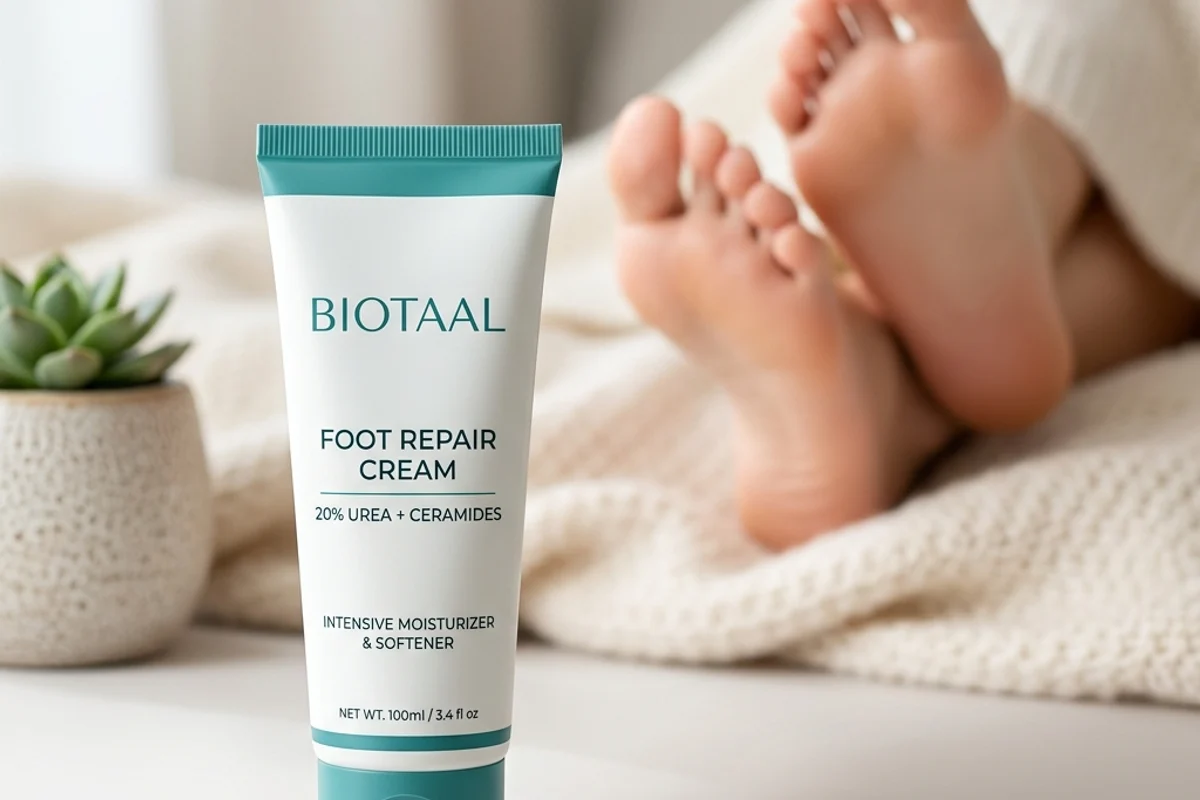
Editorial dek: This listing-led review examines a 4-ounce foot cream described as a thick white formula with 40% urea, shea butter, glycerin, tea tree oil, and vitamin E. Its appeal is straightforward: a concentrated, targeted cream format for intact foot skin that looks dry or feels rough. The more important buying question is whether that concentration, texture, scent-sensitive ingredient profile, and routine commitment suit your skin and pedicure habits.
This is cosmetic foot-care context, not a promise to treat cracked heels, pain, wounds, infection, nail concerns, or any medical foot condition. A high-urea product may be a category worth considering for rough-looking skin, but the current package directions, warnings, and complete ingredient list should always control.
Evidence note: what this review can and cannot establish
This article is based on the supplied product listing rather than independent laboratory analysis, clinical records, or hands-on testing by this publication. We did not purchase or test the cream, verify its listed 40% urea concentration, assess its actual thickness, evaluate fragrance, measure absorption, or confirm the current formula and packaging.
The listing describes a thick white 4-ounce cream and names urea, shea butter, glycerin, tea tree oil, and vitamin E. It also states a one-to-two-times-daily application schedule, a 12-month period after opening, and broader claims including “dermatologist tested” and suitability for diabetic foot care. Those are manufacturer or retailer statements as presented in the source, not conclusions reached by this publication.
What the listing-stated 40% urea concentration means
Urea is a common cosmetic ingredient in products made for dry-feeling, rough-feeling skin. In this case, the listing-stated 40% concentration positions the cream as a concentrated foot-specific option rather than a casual, light body lotion. That may be attractive if you want a product intended for small, tougher external areas of intact foot skin instead of a thin lotion designed for broad daily use.
Still, a percentage alone does not tell the entire product story. It does not confirm the amount in the tube you receive, establish the formula’s pH, show how the base feels on skin, predict whether it pills under socks, or tell you whether your skin will be comfortable with the complete formula. It also does not establish a timeline or guarantee a visible result.
Concentration is only one part of the buyer decision. The cream’s base, other humectants and emollients, preservatives, fragrance-related components, application frequency, and your own tolerance all matter. A shopper comparing this product with a lower-urea lotion should think less in terms of “higher is automatically better” and more in terms of whether they want a richer, more targeted routine with a potentially more intensive feel.
A concentration claim worth verifying on the package
The listing’s 40% figure should be treated as a specification to confirm when the product arrives. Check the tube, carton, directions, and seller information for the concentration and intended use. Product listings can lag behind reformulations, packaging updates, marketplace variations, or regional versions. If the packaging and online listing disagree, rely on the packaging and contact the manufacturer or seller for clarification before use.
It is also reasonable to ask whether the label presents urea as a percentage in the finished formula, whether the listed formula is current, and whether the product has a fragrance or essential-oil component beyond what a shortened marketplace ingredient summary reveals. Those are practical questions, not signs of overthinking a foot cream.
Formula at a glance: what is listed and what remains unknown
| Listing detail | Buyer takeaway | What it does not prove |
|---|---|---|
| 40% urea | Signals a concentrated foot-cream position. | The stated percentage has not been independently verified. |
| Shea butter and glycerin | Suggests the listing pairs urea with commonly used moisturizing ingredients. | They do not reveal the complete base or individual compatibility. |
| Tea tree oil and vitamin E | May matter to shoppers who screen for botanical oils or specific sensitizers. | Named ingredients do not establish scent, strength, or tolerance. |
| Thick white cream | Points to a richer format rather than a fast-drying spray or gel. | Actual spread, finish, and absorption were not assessed. |
| 4 ounces / 113 grams | A portable tube size for targeted use. | Confirm the current net weight and package format. |
| One to two uses daily | Indicates a recurring routine rather than occasional use only. | More frequent use is not automatically appropriate. |
The ingredient-list questions that matter before checkout
The short list of highlighted ingredients is not the same thing as a full ingredient list. Before buying, look for the complete INCI list on the manufacturer’s site, the carton, or a clear product image. If it is unavailable, that is a meaningful information gap for anyone with known ingredient sensitivities or a preference to avoid certain fragrance materials, essential oils, preservatives, or occlusive ingredients.
Tea tree oil deserves particular attention because it may not suit every routine. Some shoppers enjoy botanical ingredients; others prefer to minimize essential oils, especially in leave-on products or when their skin has reacted to fragranced formulas before. Vitamin E and shea butter can also be relevant to individual preferences or prior sensitivities. None of these named ingredients makes the formula inherently good or bad; they simply make full-label review more important.
Useful pre-purchase questions include:
- Is tea tree oil listed in the current full formula, and are additional fragrance ingredients present?
- Does the package provide a complete ingredient list, warnings, and a clear application method?
- Is the stated 40% urea concentration printed on the product itself?
- Does the product contain any ingredient you already know you avoid?
- Does the seller identify the manufacturer, lot information, and expiration or period-after-opening guidance?
When comparing urea foot creams, consider the concentration claim and the full formula list together rather than treating one percentage as the whole product story.
Texture and routine tradeoffs
A thick cream can be a benefit when you want a product that feels deliberately targeted and substantial. It may make sense for an evening routine, for use with clean socks after allowing the formula to settle, or for people who do not want to reapply a light lotion throughout the day. The listing’s one-to-two-times-daily direction also suggests that consistency, rather than occasional use of a large amount, is part of the intended routine.
The tradeoff is convenience. Richer formulas can feel too noticeable for someone who wants to put on sandals immediately, dislikes any residue before footwear, or prefers a quick-dry body lotion. Because this product is described as a thick cream, it may be less appealing for all-over leg use, warm-weather daytime application, or anyone who tends to abandon multi-step care because it feels messy.
There is also a practical distinction between a cream that is concentrated on paper and a routine that is comfortable enough to repeat. A product can have a compelling headline percentage yet still be the wrong purchase if the listed essential oil, rich base, or suggested frequency does not fit your preferences. For a first-time urea buyer, the decision is not just whether 40% sounds effective; it is whether a concentrated leave-on cream is a realistic addition to your routine.
How to place it in a cosmetic foot-care routine
For intact, non-irritated external skin only, a simple approach is generally easier to manage than a stack of intensive products. Follow the current package directions. If you choose to use the cream after bathing, dry the feet carefully first and apply only to the intact areas identified by the label. Let the product settle before socks or shoes, and wash your hands afterward unless the package says otherwise.
Do not treat a concentrated cream as a reason to intensify every other step. Avoid pairing it in the same routine with aggressive filing, sharp tools, harsh scraping, or multiple strong exfoliating products unless the manufacturer specifically directs that combination. More friction and more actives do not necessarily make cosmetic foot care more useful, and can make a routine harder to tolerate.
Patch testing and the intact-skin boundary
When trying a new leave-on product, especially one with a concentrated urea claim and tea tree oil in the listing, a cautious patch test can be sensible if the package does not advise otherwise. Apply a small amount to a limited area of intact skin and monitor according to label guidance before broader use. A patch test cannot guarantee that you will tolerate repeated use or a larger application area, but it may help identify an immediate obvious reaction.
Do not patch test or apply this cream on broken, bleeding, deeply split, visibly inflamed, blistered, draining, or otherwise compromised skin. Stop use if burning, itching, swelling, rash, or another concerning reaction develops. Cosmetic products are not substitutes for assessment of persistent, painful, or medically concerning changes.
Polish, gel, and pedicure scheduling
This cream can coexist with a home pedicure schedule, but timing matters. If you use regular polish or gel polish, avoid applying a rich cream directly onto the nail plate before a polish service. Oils and emollients can interfere with the clean, dry nail surface needed for polish preparation. Keep cream on the surrounding intact skin, or save application until after the nail prep and color steps are complete.
After a regular polish or gel manicure/pedicure is fully finished according to its product directions, a small amount of foot cream can be used on intact skin around the feet while avoiding smearing fresh color or coating the nail surface. This product is not a gel-polish remover, a nail treatment, or a replacement for the instructions that accompany gel systems. Do not use a rich cream to shortcut curing, removal, or prep steps.
On pedicure days, keep cosmetic grooming gentle. Skip the cream on any area that is irritated from friction or grooming, and do not use it to push through soreness or visible skin damage. For additional at-home maintenance context, see our safe at-home pedicure routine.
Listing claims versus meaningful evidence
The supplied listing says the product is “dermatologist tested” and “suitable for diabetic foot care.” These phrases should be interpreted carefully. “Dermatologist tested” can mean different things depending on the company’s protocol, including who was involved, how many participants were included, what was evaluated, and what the results were. The supplied listing does not provide that supporting information, so the phrase should not be read as a universal safety endorsement.
Likewise, a broad diabetic-foot-care statement is not individualized medical guidance. People with diabetes, reduced sensation, circulation concerns, a history of foot wounds, or healing concerns should ask a qualified clinician before using a high-urea foot product or changing their foot-care routine. That is especially important when there are any open areas, color changes, pain, swelling, or skin changes that do not resolve.
Who may find this format appealing
This product may be worth considering for an adult who wants a concentrated, cream-based cosmetic option for intact foot skin that looks dry or feels rough; prefers a thicker texture over a weightless lotion; has reviewed the full, current ingredient list; and can accommodate a one-to-two-times-daily routine. It may also suit a shopper who specifically wants a urea-forward product and understands that the 40% statement is a listing claim to verify, not an independently established performance guarantee.
The 4-ounce size may appeal to someone who intends targeted use rather than generous all-over body application. Its richer positioning is likely more compatible with an evening routine than with a quick, barefoot daytime application before open shoes.
Who should choose another option or pause
Skip this product for wounds, bleeding skin, open splits, blisters, unexplained redness, drainage, marked swelling, suspected infection, significant pain, or nail concerns. It is not a cosmetic workaround for those situations. Also skip it if you know tea tree oil, fragrance-related ingredients, urea products, or any component on the full label has caused a reaction for you before.
A different category may be a better fit for shoppers who want a thin, rapid-drying lotion; do not want botanical oils in leave-on care; cannot access a complete ingredient list; or do not want to maintain a repeated targeted application schedule. People whose health conditions affect sensation, circulation, healing, or routine foot care should seek individualized guidance before using this type of concentrated product.
Practical limitations to weigh
- The 40% urea level is listing-stated, not independently verified by this publication.
- A thick texture can be desirable at night but inconvenient before socks, shoes, or sandals.
- The named tea tree oil may narrow the audience for scent-sensitive or essential-oil-avoidant shoppers.
- The abbreviated ingredient highlights do not replace the complete package INCI list.
- The cream is for cosmetic care on intact skin, not a promise to resolve cracked, painful, or medically concerning foot skin.
- Retailer language such as “dermatologist tested” does not explain testing standards or guarantee individual suitability.
FAQ
Is 40% urea automatically better than a lower-strength foot lotion?
No. The listed percentage signals a more concentrated positioning, but the best choice depends on formula preferences, skin tolerance, the complete ingredient list, and whether you will realistically use the product as directed.
Can this cream be used on cracked heels?
This review does not recommend it as treatment for cracked heels. Use cosmetic products only on intact, non-irritated skin and follow the package. Open, bleeding, painful, or persistent skin changes warrant qualified assessment rather than additional self-treatment.
Should I patch test this foot cream?
A cautious patch test on a small area of intact skin may be appropriate when trying a new leave-on formula, particularly if you are sensitive to fragranced or botanical products. Follow the package guidance, and remember that a patch test does not guarantee long-term tolerance.
Can I use it with gel polish?
Keep rich cream away from the nail plate before gel-polish prep, since emollients can interfere with a clean nail surface. Use it on intact surrounding skin after the gel service is completed according to the gel product’s directions.
Is the diabetic-foot-care claim enough to make it appropriate for everyone with diabetes?
No. That is a listing claim, not individualized advice. Anyone with diabetes or concerns involving sensation, circulation, wounds, or healing should consult a qualified clinician before using a concentrated foot product.
Final verdict
The strongest reason to consider this foot cream is its listing-stated 40% urea concentration in a thick, targeted 4-ounce format, supported by named shea butter, glycerin, tea tree oil, and vitamin E. It is best approached as cosmetic care for intact rough, dry-looking foot skin—not as a remedy for cracked, painful, broken, or medically concerning skin. Verify the current formula and label, patch test cautiously when appropriate, and choose it only if a richer, repeat-use routine fits your preferences.