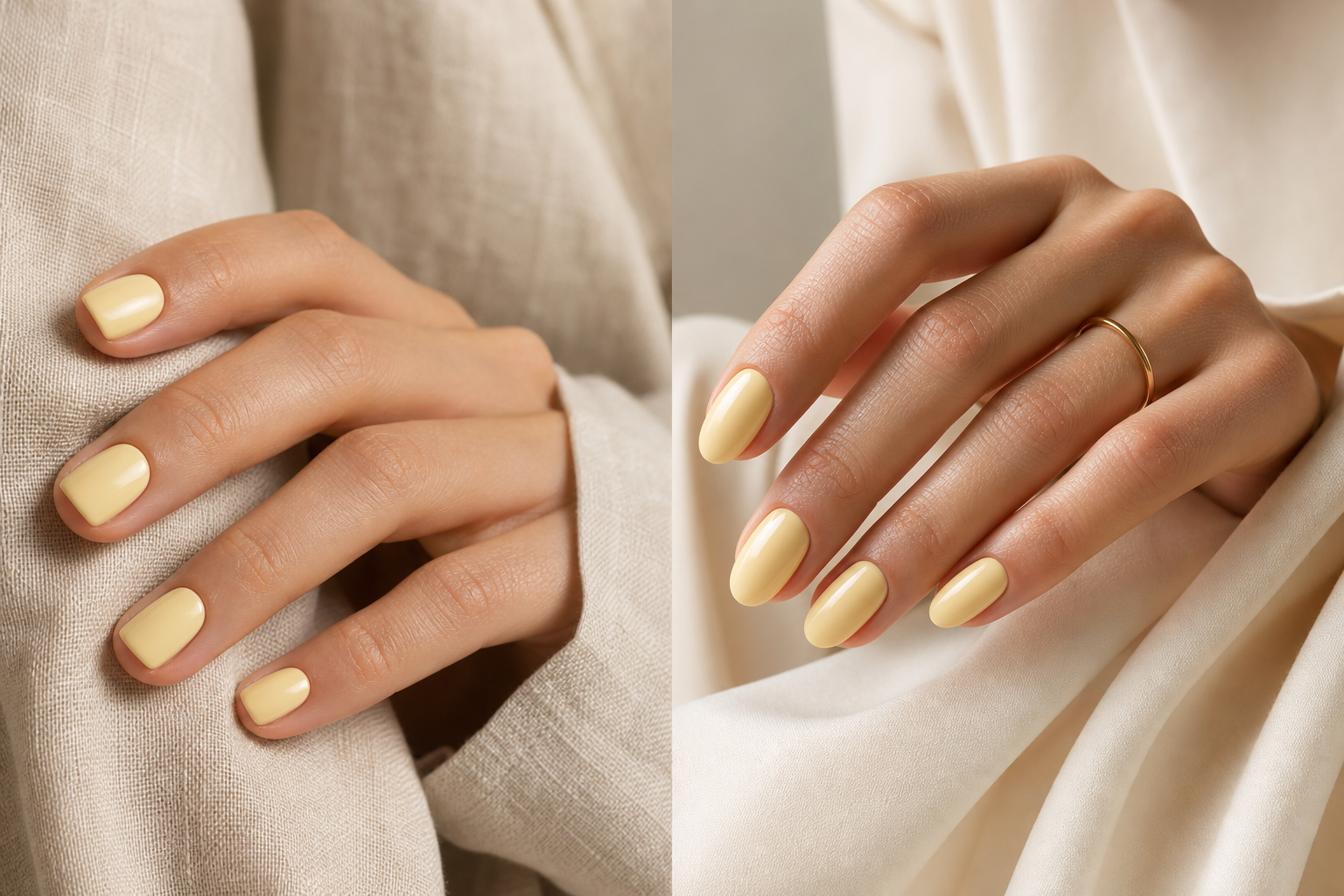
A good butter yellow manicure has the quiet, almost culinary softness of a pat of butter on a white plate. It is recognizably yellow, but it is not trying to shout from across the room. The catch is that pale yellow is unusually sensitive to formula, natural-nail color, and lighting. A bottle that appears warm and creamy on a salon wall can turn stark, streaky, or faintly green once it is on the hand. Choosing it well is less about finding one supposedly perfect yellow and more about understanding the visual details that keep the result soft.
What makes a yellow read as butter yellow?
Butter yellow sits between vanilla and softened marigold. It generally has low-to-medium saturation, a touch of warmth, and enough cream or beige in the base to mute the sharpness of pure yellow. Picture buttercream, custard, or corn silk rather than a lemon drop. The color should feel softened, not faded.
It helps to separate butter yellow from its close relatives before choosing a polish. Neon yellow is clearer, brighter, and more electrically saturated. Mustard is deeper, browner, and often edged with ochre or olive. Stark pastel yellow carries a larger dose of white, sometimes with a cool cast that can make it look powdery. A butter shade can still be pale, but it needs some warmth and dimension so it does not resemble white polish with a drop of yellow pigment.
Butter yellow shade and finish matrix
Use the matrix as a starting point when you are comparing swatches. The names on bottles vary widely, so the visible base color and opacity matter more than whether a polish is labeled “butter,” “cream,” or “pastel.”
| Direction | Color cue | Best use | Finish or detail | Watch for |
|---|---|---|---|---|
| Creamy opaque butter | Warm ivory base with muted yellow pigment | Solid color on short ovals or rounded squares | Glossy top coat | A white-heavy formula can look chalky in direct light |
| Custard jelly | Transparent golden-yellow veil | Layered, casual color with visible depth | Glass-like gloss | Natural nail line will remain part of the look |
| Milky butter French | Soft yellow tip over a sheer neutral base | Short or medium nails when full yellow feels like too much | High shine or a fine pearl veil | Very bright tips can read more lemon than butter |
| Pearl butter | Creamy yellow with a restrained reflective layer | Simple solid sets that need a little movement | Sheer pearl chrome | Dense silver chrome can turn the color frosty |
| Butter with floral accents | Warm yellow paired with white, brown, or soft pink details | One or two accent nails | Tiny daisies, petals, or dot centers | Large flowers on every nail can overpower a subtle shade |
Experiment with undertone instead of following rigid rules
Undertone advice is useful only when it becomes a tool for observation, not a rulebook. Hold a swatch beside the hand in daylight, then look again indoors. The skin’s natural warmth or rosiness, the color of the nail plate, and the polish base all interact. If a pale yellow makes the hand look pinker than you prefer, move toward a more vanilla, beige-leaning butter. If it looks dull or a little khaki, try a cleaner custard yellow with less brown in the formula.
The natural nail matters as much as skin tone. A translucent yellow over a pink nail bed will look different from the same polish over a pale, opaque base. This is why a single bottle swatch can be misleading: salon swatches are often displayed over a uniform tip rather than your own nail. Ask to see the shade over clear and, if available, over a sheer milky base before committing to a full set.
What to say at the salon
Specific language saves a lot of back-and-forth. Try: I’m looking for a creamy butter yellow with warmth—no neon, no mustard, and no very white pastel. I want it soft but still clearly yellow. Can we compare a more opaque cream with a slightly translucent option?
If you have a photo, use it to describe opacity and finish as much as color. A glossy custard jelly and a fully opaque pale yellow may photograph similarly but look quite different in person.
Ask the technician to swatch two candidates near your hand rather than selecting by the bottle alone. If one option looks too white after the first layer, it may not gain warmth with additional coats. If it looks too sheer, ask whether it is intended as a jelly finish or whether there is a cream formula in the same color family. Those are two different looks, not a problem to solve with endless layers.
Shape and length change the mood
On short nails, butter yellow has a neat, compact quality. A rounded square or soft oval keeps the color approachable and lets the creamy tone do the work. This is the most pared-back interpretation: one solid shade, tidy sidewalls, and a gloss finish. If your nails are very short, a slightly deeper butter with more golden pigment can preserve the yellow effect without looking washed out.
Medium-length oval and soft almond shapes give the color more air. They are especially suited to a French tip, a sheer jelly, or a small floral placement near one side of the nail. On longer almonds, coffins, or squares, butter yellow becomes more graphic because there is simply more visible color. That can be beautiful, but consider a translucent version, a negative-space French, or a single pearl accent if an all-over opaque yellow feels too solid for your style.
Five ways to wear butter yellow
1. The clean solid manicure
A creamy, opaque butter yellow with a glossy finish is the clearest version of the idea. It works best when the application is smooth and the color is allowed to remain simple. Skip competing accent colors and let the warmth of the polish carry the look.
2. Butter yellow French tips
French tips are an easy entry point for anyone unsure about a full yellow manicure. Use a sheer pink, beige, or milky base, then keep the yellow tip narrow enough that it feels like a detail rather than a color block. A curved smile line usually softens the effect; a very straight, bright tip can push the shade toward classic lemon.
3. The custard jelly
A jelly formula gives butter yellow a stained-glass quality. It is intentionally translucent, so do not expect it to hide the natural nail line. The best version looks juicy and warm rather than patchy. If you want a clean jelly effect, choose a purposefully sheer polish instead of trying to thin out an opaque cream with unrelated products.
4. Tiny floral accents
Butter yellow and small florals can be charming without becoming overly themed. Keep the art restrained: a single white daisy on each ring finger, tiny brown centers, or a few petals placed near the cuticle. White, soft pink, warm brown, and pale green are useful supporting colors, but yellow should remain the dominant note.
5. A pearl or chrome layer
A sheer pearl chrome can make a creamy yellow look more luminous without changing it into metallic silver. The key is restraint. A dense chrome powder or strongly cool reflective finish may flatten the warmth that made the butter shade appealing in the first place. For a subtle result, choose pearl rather than mirror chrome and keep the rest of the set free of heavy embellishment.
At home: build opacity without overworking the polish
Yellow is not always the easiest color to apply at home because pale pigments can reveal brush marks, ridges, and uneven pressure. Start with clean, dry nails and a base coat suited to the system you are using. If texture is the issue, a smoothing or ridge-filling base can create a more even visual canvas. If your nails have visible staining, a lightly blurring base may help, but an intensely white base can make a butter shade look more pastel and chalky.
- Roll the bottle gently between your hands if the maker recommends mixing it that way, then wipe excess polish from one side of the brush.
- Apply a controlled first coat with a center stroke followed by each side. Do not keep brushing the same area once the polish starts to set.
- Add the next thin coat only as directed by the product instructions. Look at the result in more than one light source before deciding whether it needs another layer.
- Finish with a compatible top coat. Gloss tends to emphasize the creamy depth of butter yellow, while matte makes pigment and texture more visible.
The limitation is simple: layering cannot transform every formula. A sheer jelly will stay translucent, and a white-based cream may stay powdery even when it is perfectly applied. If the formula is not giving you the effect you want, switching shades is usually more effective than piling on a heavy corrective coat. For gel application technique, see this guide to thin gel-polish coats; if the surface is wrinkling or curing unevenly, consult the gel-polish curing troubleshooting guide.
With gel—or any chrome design that relies on a gel layer—keep uncured gel off your skin. Clean accidental contact before cure using the maker’s directions; follow the matched product and lamp cure instructions; and stop if you notice irritation or painful heat. If you are still deciding whether an at-home gel setup suits your routine, the gel polish starter-kit guide can help you compare the basic format and tools involved.
Wardrobe pairings that make sense with the color
Butter yellow looks especially at home beside materials with some softness of their own: white cotton poplin, cream knitwear, faded denim, light-wash chambray, raffia, and warm tan leather. It also creates a pleasing contrast with ink navy, chocolate brown, tomato red, and crisp black. Gold jewelry heightens the warmth, while silver offers a cooler, less sweet contrast.
Think of these as styling prompts rather than requirements. A butter manicure does not need a matching sundress or a full pastel palette. In fact, pairing it with a simple white shirt, a navy bag, or worn-in jeans often keeps the nail color from feeling overly precious.
Mistakes to troubleshoot before abandoning the shade
- It looks chalky: The polish may have too much white in the base, or the base coat may be making the color read cooler. Try a warmer, slightly more translucent butter shade and return to a glossy finish.
- It looks greenish: Assess it in daylight and indoor light before judging. Cool bulbs can exaggerate a yellow’s green edge. If the cast remains, choose a polish with a touch more orange or vanilla warmth rather than olive or chartreuse undertones.
- It is streaky: Avoid trying to fix visible lines by dragging a brush through a setting layer. Use thin, deliberate coats and let the formula’s intended opacity guide you. A smoother base can help when ridges are contributing to the unevenness.
- The French tip looks too bright: Narrow the tip, soften the smile line, or select a creamier yellow. A sharp, opaque stripe in a clear lemon tone changes the whole manicure’s mood.
- The nail art feels busy: Remove one element. Butter yellow already carries color, so a pearl finish, floral details, chunky glitter, and multiple accent shades rarely need to appear on the same set.
Butter yellow nails FAQ
Can butter yellow be sheer?
Yes. A custard-toned jelly can still read as butter yellow if it has warmth and avoids a fluorescent or sharply lemon cast. Expect the natural nail to remain visible by design.
Do I need a white base under butter yellow?
No. A white base can increase opacity, but it can also make the color cooler and more chalky. A clear, smoothing, or softly milky base is often a more flexible starting point.
Which finish is the most forgiving?
Gloss is generally the easiest place to start because it visually connects translucent layers and supports the creamy effect. It will not hide pronounced brush marks, so application still matters.
Can I wear butter yellow in cooler months?
Absolutely. Shift the styling rather than the color: pair it with chocolate brown, charcoal, navy, olive-free khaki, or deep denim instead of leaning into a head-to-toe pastel palette.
Butter yellow is at its best when it feels considered rather than forced. Choose a shade with enough warmth to look intentional on your own hand, decide whether you want creamy opacity or jelly transparency, and keep the surrounding details edited. The result can be as quiet as a solid short manicure or as playful as a small floral French—without losing that soft, buttery character.