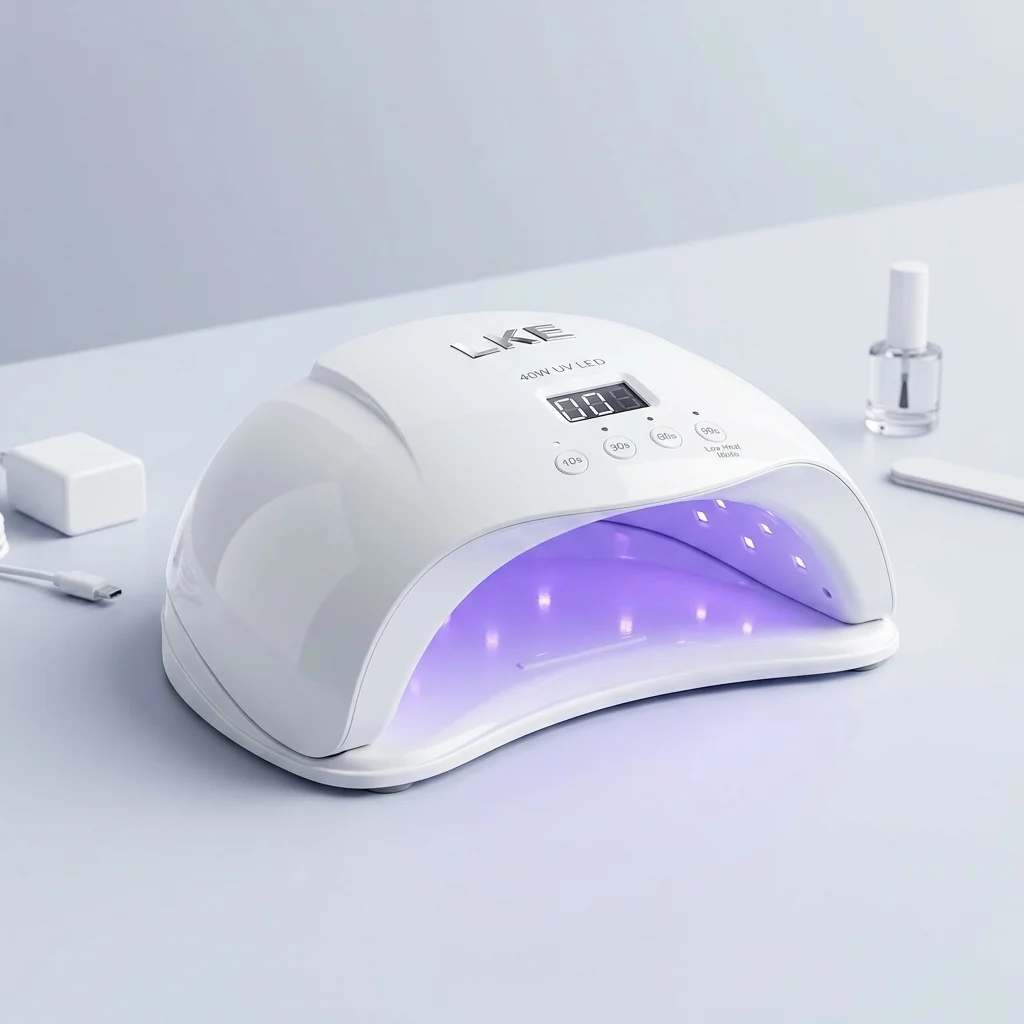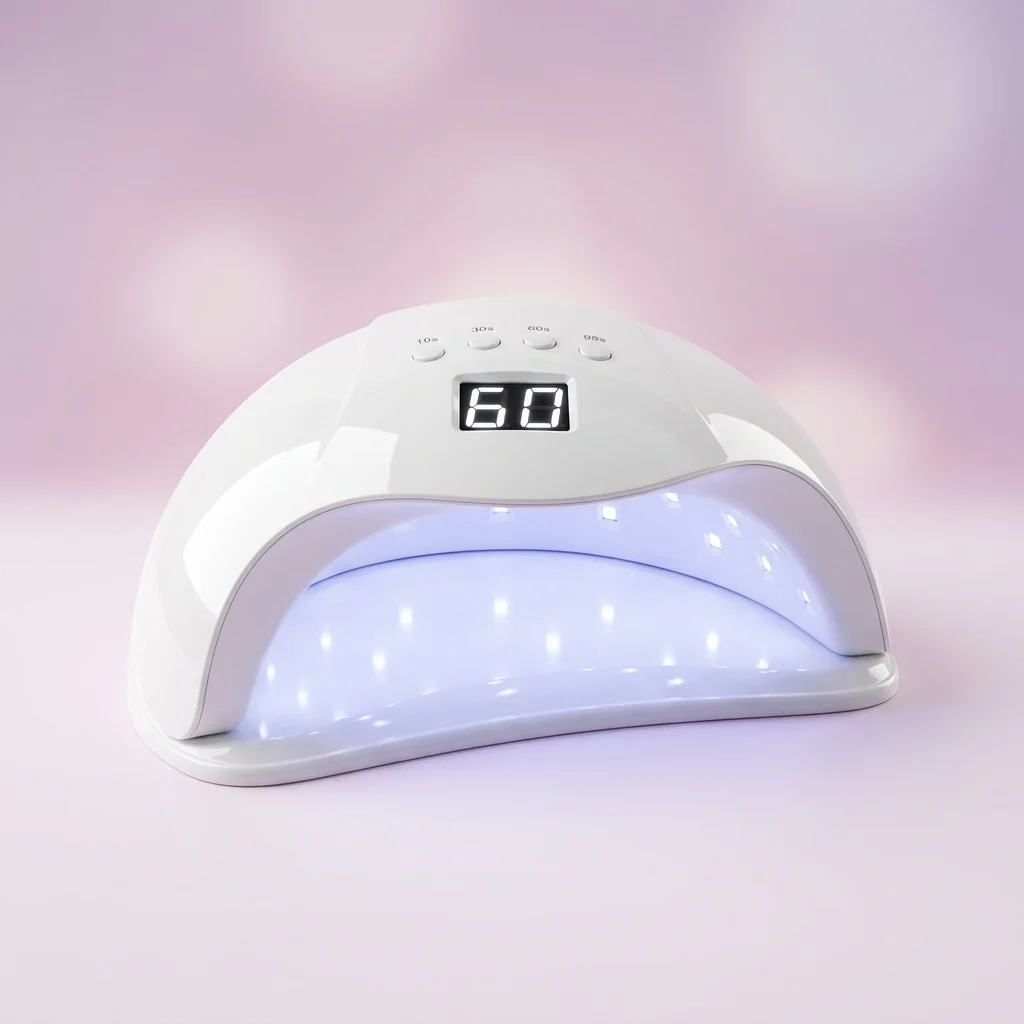
Editorial dek: The LKE 40W UV LED Nail Lamp is presented in its product listing as a compact, USB-powered gel-curing lamp with 21 dual-light LED beads, 365nm and 405nm wavelengths, 30-, 60-, and 90-second timers, an LCD display, an automatic sensor, and a removable tray. Those are useful convenience features, but the most consequential question is not the 40W headline: it is whether you can provide the lamp with the exact USB power arrangement its current instructions require.
For shoppers building a small at-home gel setup, the USB format may be genuinely appealing. It can reduce the number of bulky components on a vanity, fit more easily into a drawer, and potentially work near an already-established desk or bedside charging area. Still, USB is a connection format rather than a complete performance specification. Before treating this as an easy plug-and-play purchase, verify the required input details, cable arrangement, and compatibility with the gel system you intend to use.
The evidence behind this review
This assessment relies on supplied product-listing information and general buying considerations for cosmetic gel lamps. We did not independently test this lamp, confirm its actual output, inspect the cable, measure its dimensions or weight, map LED coverage, verify sensor performance, or establish compatibility with any particular gel polish, builder gel, extension product, or brand system.
The listing describes the LKE model as a 40W lamp with 21 dual-light LED beads operating at 365nm and 405nm. It also lists approximate dimensions of 8.5 by 4.3 by 3.5 inches, a weight under one pound, an included USB cable, three timer settings, an LCD display, a sensor, and a removable tray. Treat those as listing claims that may vary by seller, production version, or bundled accessory package. The current instruction manual and the retailer page for the exact unit in your cart should take priority over older listings, photos, or reviews.
USB power is the real buying question
“USB-powered” sounds straightforward, but it leaves several practical questions unanswered unless the lamp’s instructions spell them out. A USB cable does not, by itself, identify the voltage and current the lamp expects, the minimum power capability required from the source, the type of connector at either end, whether a wall adapter is included, or whether operation from a computer, hub, power bank, or multiport charger is supported.
That uncertainty matters because a USB source is not automatically interchangeable with every other USB source. A desktop computer port, monitor port, old charging brick, travel adapter, charging hub, car outlet, and battery pack can have different capabilities and operating behavior. A source may also be sharing power with other devices. The fact that a plug accepts a cable does not establish that the source matches the lamp’s requirements.
Before ordering, look for the lamp’s stated input requirement in the current manual, on the housing label, or in a manufacturer-published support document. Then compare that information with the power source you expect to use. If the instructions specify a particular adapter rating, use that arrangement rather than guessing based on a phone charger you already own. If the instructions are unclear, getting clarification from the seller or manufacturer is more useful than inferring suitability from the 40W label.
Why the 40W label is not enough
The listing’s 40W figure is a comparison detail, not a complete answer to curing performance or USB needs. It does not tell a buyer how the lamp behaves with every compatible-looking USB source, how light is distributed across the interior, or whether a specific gel formula will cure as directed. It also does not replace the gel manufacturer’s own lamp guidance.
For gel products, formula compatibility, application thickness, nail placement, prescribed cure time, and the lamp system specified by the gel brand all matter. A higher-looking wattage number should not be used as a shortcut for those instructions. Likewise, running an extra-long cycle is not a universal remedy for an uncertain power source, a formula that calls for another lamp, thick layers, or poorly positioned nails.
USB adapter questions to answer before checkout
- Does the current lamp documentation state the required input voltage and current?
- Is a wall adapter included, or does the package include only a cable?
- What connector does the lamp use, and what connector is on the supplied cable?
- Does the instruction manual identify compatible adapter types or explicitly permit computer ports, hubs, or power banks?
- If you use a multiport charging block, will the lamp have a dedicated port rather than sharing available power with several devices?
- Does your planned setup keep the cable and adapter dry, visible, and free from tension?
- Are you prepared to use the supplied cable if the manufacturer directs that, rather than substituting an unverified cable?
A USB-first setup is most convenient when these answers are clear before the lamp arrives. If you want an appliance with a dedicated wall connection, published electrical specifications, and fewer decisions about adapters and shared charging stations, a conventional plug-in lamp may be easier to evaluate.
A compact shell changes how hands fit inside
According to the listing, the lamp measures approximately 8.5 by 4.3 by 3.5 inches and weighs under one pound. Those measurements are not independently verified, but they indicate a smaller, lighter shell than many larger salon-style lamps. That can be a strength for apartment bathrooms, dorm rooms, shared counters, travel bags, and manicure kits that need to be packed away after use.
The tradeoff is hand geometry. Exterior dimensions do not tell you the full usable interior opening, where each LED sits, or how comfortably a hand can rest without fingers crowding one another. A compact housing may require more deliberate placement, especially for longer nails, wider hands, thumb positioning, or a manicure involving a structured overlay or extension shape. The removable tray may make the opening easier to access, but it does not establish that all nails receive identical exposure in every hand position.
Instead of sliding in a hand and assuming the sensor has done the work, follow your gel brand’s positioning guidance and keep your hand stable for the full directed cycle. Avoid casually twisting the wrist, angling fingertips toward one side, or lifting the thumb out of the intended curing area. If your gel instructions direct separate thumb curing, follow that process. The sensor can start a cycle; it cannot verify even exposure across every nail.
Cable placement deserves more attention than it gets
Compact lamps are often used in cramped spaces, where cable management can become an afterthought. Place the lamp near the power source rather than pulling the cable tightly across a sink edge, drawer corner, chair arm, or walking path. Keep enough slack for natural hand placement, but not so much that the cable loops into your working area or can be snagged while a hand is under the lamp.
A practical setup places the lamp on a stable, level, dry surface with the cable exiting toward the back or side where it will not interfere with your wrist. Do not trap the cable beneath the lamp, bend it sharply at the connector, use it when damaged, or place it where polish remover, spilled product, or water can contact it. If the lamp’s cable is unusually short for your intended table, do not assume any extension or replacement cable is suitable; check the manufacturer’s direction first.
For a small vanity, it can help to create a simple sequence: set the lamp in its final position, connect power, arrange your gel products within reach, and then begin application. Moving the lamp repeatedly after uncured product is on the nails increases the odds of bumping the housing, dragging the cable, or contaminating the tray.
Timers, display, and sensor: useful workflow tools, not quality controls
The listing names 30-, 60-, and 90-second timer options and an LCD display. These are sensible convenience features for keeping a manicure process organized. A visible countdown can reduce the need to estimate time, while preset buttons can make it easier to repeat the cycle a product label calls for.
However, timer availability should not dictate your gel routine. Select the time specified by the gel product manufacturer, not simply the longest available preset. If a product’s instructions call for a time not represented by one button, use only the method the manufacturer directs rather than creating an improvised cure plan. The lamp’s timer labels describe its controls; they do not certify suitability for every formula.
The automatic sensor listed for this model may simplify hands-free starts when you insert a hand. It is still a limited convenience feature. A sensor generally detects presence or movement in its activation area, not whether every finger is centered, whether a thumb is positioned correctly, whether the tray is seated, whether the selected timer matches the formula, or whether the lamp has an appropriate power supply. If the sensor turns on unexpectedly during setup, use the unit according to its instructions and keep your hands clear until you are ready for the intended cycle.
A practical compact-lamp workflow
- Confirm that the lamp, cable, adapter arrangement, and work surface match the current instructions.
- Read the gel product’s directions before applying product, including its specified lamp and cure-time guidance.
- Apply thin, controlled layers as directed and keep uncured product off surrounding skin.
- Choose the timer specified for that formula instead of treating the lamp’s longest setting as the default.
- Place the hand deliberately, keeping nails in the intended curing area and following any separate-thumb guidance from the gel brand.
- Allow the cycle to finish without shifting hand position or using the countdown as proof that all formulas are universally compatible.
- Disconnect and store the lamp only after the work area is clean and dry.
This is a cosmetic-use workflow, not a substitute for product instructions. Do not use a gel lamp on broken, irritated, or otherwise compromised skin, and do not use a cosmetic foot-care setup as a way to address pain, infection concerns, nail injury, or other health issues.
What the removable tray does—and does not—solve
The removable tray is one of the more practical listed features. In a home manicure context, a detachable base can make it easier to wipe away ordinary dust or superficial product residue following the lamp manufacturer’s cleaning guidance. It may also make the housing easier to position over a surface.
For pedicures, do not assume that a removable tray automatically makes the lamp appropriate for every foot size, toe shape, or gel service. The supplied information does not confirm the interior clearance, the intended foot placement, or whether the current version is specifically designed for toes. Check the manual and product page before using it for feet. Keep the lamp on a stable dry surface, do not force a foot into a compact opening, and do not place the unit on wet bathroom flooring or near water.
Remove only components that the manufacturer says are removable, and do not immerse the housing, cable, or connectors. Cleaning should be limited to the method specified in the current instructions. A removable base is a convenience feature; it is not evidence of waterproof construction or broad foot-treatment capability.
Travel and storage: where this format has an advantage
The listing’s under-one-pound weight and compact dimensions suggest that this could be easier to store than a full-size lamp. For occasional users, it may fit into a lidded beauty bin, drawer, or dedicated manicure pouch alongside supplies. The USB cable can also be easier to organize than a larger proprietary power brick, provided you keep it with the lamp and know which adapter arrangement is approved.
For travel, pack the lamp only when it is clean, fully dry, and protected from pressure. A compact plastic shell can still be damaged if it is packed loosely beneath heavy shoes, hair tools, or glass bottles. Coil the cable gently rather than wrapping it tightly around the lamp or sharply bending it at the connector. Keep gel bottles sealed and separate so a leak does not reach the electrical components.
Temperature and storage conditions matter, too. Avoid leaving cosmetic tools and gel products in a hot car, direct sun, damp bathroom cabinet, or other environment that conflicts with their instructions. If you are traveling by air or using the lamp with a portable battery, check the carrier’s current rules and the power-bank manufacturer’s instructions; the supplied listing does not establish power-bank compatibility for this lamp.
Who this format may suit
The LKE’s listed feature set may appeal to the occasional at-home gel user who values a small footprint, simple preset timers, a display, and the potential flexibility of USB power. It makes the most sense for someone who already has a confirmed compatible gel system and is willing to verify the lamp’s input requirements before setting up a charging brick, desk port, or other source.
It may also suit a buyer whose manicure area needs to be packed away between uses. The listing’s compact dimensions and low stated weight are more relevant here than the advertised wattage. A small lamp can be a sensible purchase when storage, cable routing, and occasional convenience matter more than having a larger all-day station on the counter.
Who should consider another option
Skip this format, or pause before buying, if you want a lamp with clearly published adapter specifications included in the box, a larger housing for roomier hand placement, documented irradiance information, or manufacturer-confirmed compatibility with a particular professional enhancement system. It is also not the clearest choice for anyone who does not want to assess USB adapters, port capability, cable routing, and storage conditions.
Buyers who regularly perform pedicures should verify intended foot use and interior clearance rather than relying on the removable-tray listing language. And if your preferred gel manufacturer requires a particular lamp or system, that direction should outweigh the appeal of this lamp’s price, size, timer selection, or 40W rating.
For broader format guidance, see our cordless versus plug-in nail lamp guide and our gel lamp compatibility guide.
USB-first buying checklist
- Verify the exact lamp version, included cable, and accessories on the retailer page.
- Find the current manufacturer input specification before choosing an adapter.
- Use the approved power arrangement rather than assuming a random USB port will work as intended.
- Confirm that your gel brand permits or recommends the lamp type and follow its prescribed cure time.
- Measure your counter, drawer, or travel case against the listing’s approximate 8.5-by-4.3-by-3.5-inch dimensions.
- Plan the lamp’s cable route so it is not stretched, pinched, wet, or crossing a walkway.
- Consider whether your hand size, nail length, and thumb-curing routine are realistic for a compact shell.
- Check the current instructions before using the removable tray for a pedicure setup.
- Inspect the cable, port, and housing before each use; do not operate damaged components.
FAQ
Does the 40W rating mean this lamp will cure every gel product?
No. The listing’s 40W claim does not establish universal gel compatibility. Follow the gel manufacturer’s lamp, application, and timing instructions.
Can I use any phone charger or laptop port?
Not automatically. The supplied listing does not identify the required adapter specifications or confirm compatibility with every USB source. Check the current lamp instructions first.
Is the sensor a replacement for choosing the right timer?
No. A sensor may start the lamp when a hand is inserted, but it does not determine the correct cure time or confirm nail placement.
Can the removable tray be used for pedicures?
Only if the current manufacturer instructions indicate intended foot use. The listing detail alone does not confirm clearance, positioning, or suitability for every foot.
Final verdict
The LKE 40W UV LED Nail Lamp is best considered a compact USB-format curing lamp with practical listed conveniences: 21 dual-light LEDs, 365nm and 405nm wavelengths, three timer presets, a display, a sensor, and a removable tray. Its approximate listed dimensions and under-one-pound weight may make it attractive for small-space storage and occasional home manicures.
But this is not a wattage-led purchase. The decisive pre-purchase task is confirming the lamp’s required USB input and pairing it only with a suitable power arrangement and compatible gel system. If those details are documented and your compact-space workflow is sound, the format may be a reasonable fit. If they are not, choose a lamp with clearer power documentation and system-specific compatibility guidance.