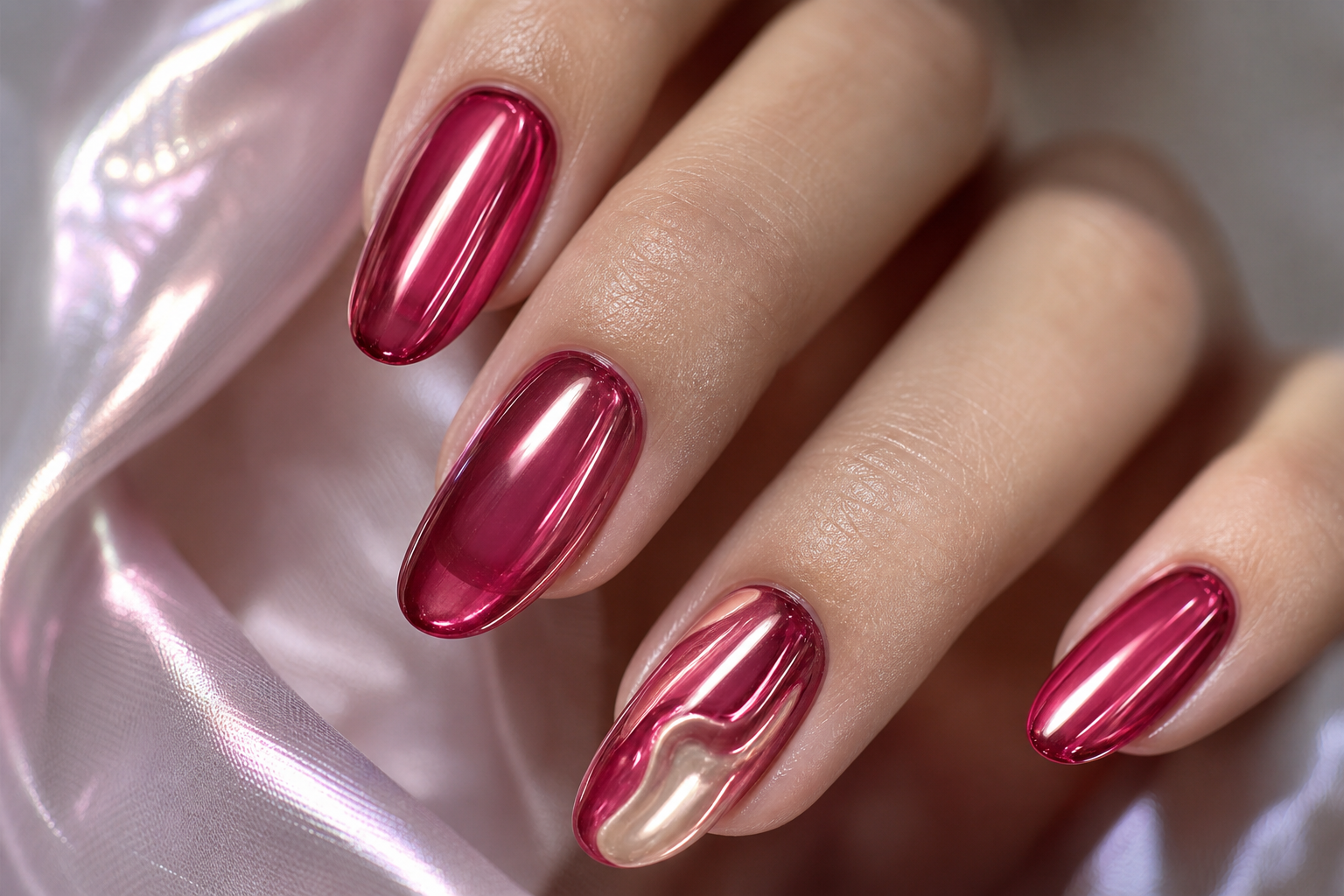
A jelly manicure is read through; chrome is read off its surface. Chrome jelly nails deliberately make both directions visible: transparent color sits beneath a light-catching film, so the manicure changes as light meets it. That tension, rather than a bigger dose of shine, gives the look its glassy quality. It is not simply a shiny pink manicure, and it should not become a solid metal shield.
The approach is a layering idea, not one bottled shade. It can be barely there—sheer rose and pearl—or more graphic, such as blue jelly under cool silver. Either way, the proportion matters: let some color depth show, then add enough reflection to register without erasing it.
What chrome jelly nails are—and what they are not
Jelly refers to transparent or translucent color. Unlike a cream polish, it leaves visual depth between the surface and whatever sits below it: the free edge, an extension, or earlier color layers. Chrome is a highly reflective pigment or effect layer. In a true powder version, fine pigment is burnished over a compatible cured gel surface and then sealed. In a brush-on version, reflective particles are suspended in the product itself.
- Plain jelly nails use translucent color and a glossy finish. Their shine comes from gloss, not an independent reflective veil.
- Opaque chrome nails use a fully covering color or metallic base. They can be sleek and intentional, but transparency is not the point.
- Chrome jelly nails retain see-through color while adding a pearly, silvered, or color-shifting reflection that seems to sit apart from the tint.
The quickest visual check is to look at the nail away from direct light. If the color still appears to have depth, then flashes when the hand moves, the balance is in chrome-jelly territory. If it reads as uniform metal from every angle, the chrome has overtaken the jelly. If it reads only as shiny color, it is simply a jelly manicure.
Choose the jelly color before the chrome
The jelly is not just a background. It determines whether the manicure reads like stained glass, colored cellophane, a sheer wash, or a more deliberate metallic tint. A pale pink, tea rose, transparent beige, or soft peach lets a pearl powder stay airy. Lilac, aqua, icy blue, and cool grape jelly sharpen a silver or blue-shift chrome. Cherry, cola, emerald, and smoky plum create more contrast, especially on longer nails.
Warm and cool undertones matter more than any fixed color rule. Champagne chrome over peach jelly turns more golden; a blue-white pearl over the same peach can look cleaner and less sunlit. A black, white, or cream base can make chrome dramatic, but it moves the result away from the transparent definition of a jelly manicure. A milky layer can be useful if you want haze, just recognize that every cloudy coat reduces the glass effect.
Build density intentionally. One thin jelly coat gives a tint. A second can make the color more legible while still leaving depth. Once the color has become solid, adding chrome will not bring the jelly quality back.
The layer order changes the whole effect
There is no single universal chrome-jelly sequence because powders, no-wipe surfaces, gels, and chrome-effect top products are formulation-specific. Still, the order tells you what the eye will notice first. The classic route places chrome over the jelly; a reverse order places jelly over sealed chrome for a tinted-metal look. The matrix below maps the visual difference before you commit to a full set.
| Layer plan | General sequence | Visual result | Choose it when |
|---|---|---|---|
| Surface chrome veil | Base, jelly color, compatible no-wipe surface, chrome powder, sealing top. | The jelly stays visible first; reflection floats at the surface. | You want the clearest chrome-jelly definition. |
| Tinted metal | Base, chrome-ready surface, powder, thin seal, jelly color, final top. | Color filters the reflection like glass over metal. | You want richer metallic depth and can keep layers lean. |
| Brush-on glaze | Base, jelly, chrome-effect brush-on product, then any finish specified for that product. | A soft pearly movement rather than a burnished mirror. | You prefer to skip loose powder. |
| Plain jelly reference | Base, jelly color, glossy top. | Transparent color with surface gloss but no chrome flash. | You want the color depth without reflection. |
For a first chrome-jelly attempt, the surface-veil route is the easiest idea to communicate because the color is established before the chrome is added. The tinted-metal route is more nuanced: the jelly becomes a filter over the reflective layer, which can be beautiful, but it also makes the final result less transparent and adds another opportunity for bulk.
Chrome powder versus a chrome-effect top product
True chrome powder is the sharper option. It has a burnished, continuous-looking reflection when the powder and the cured surface are compatible. Powder names can be misleading, though: a product described as pearl, aurora, silver, glazed, or mirror may produce very different levels of coverage. A dense silver powder can quickly turn a pale jelly base into something closer to opaque chrome.
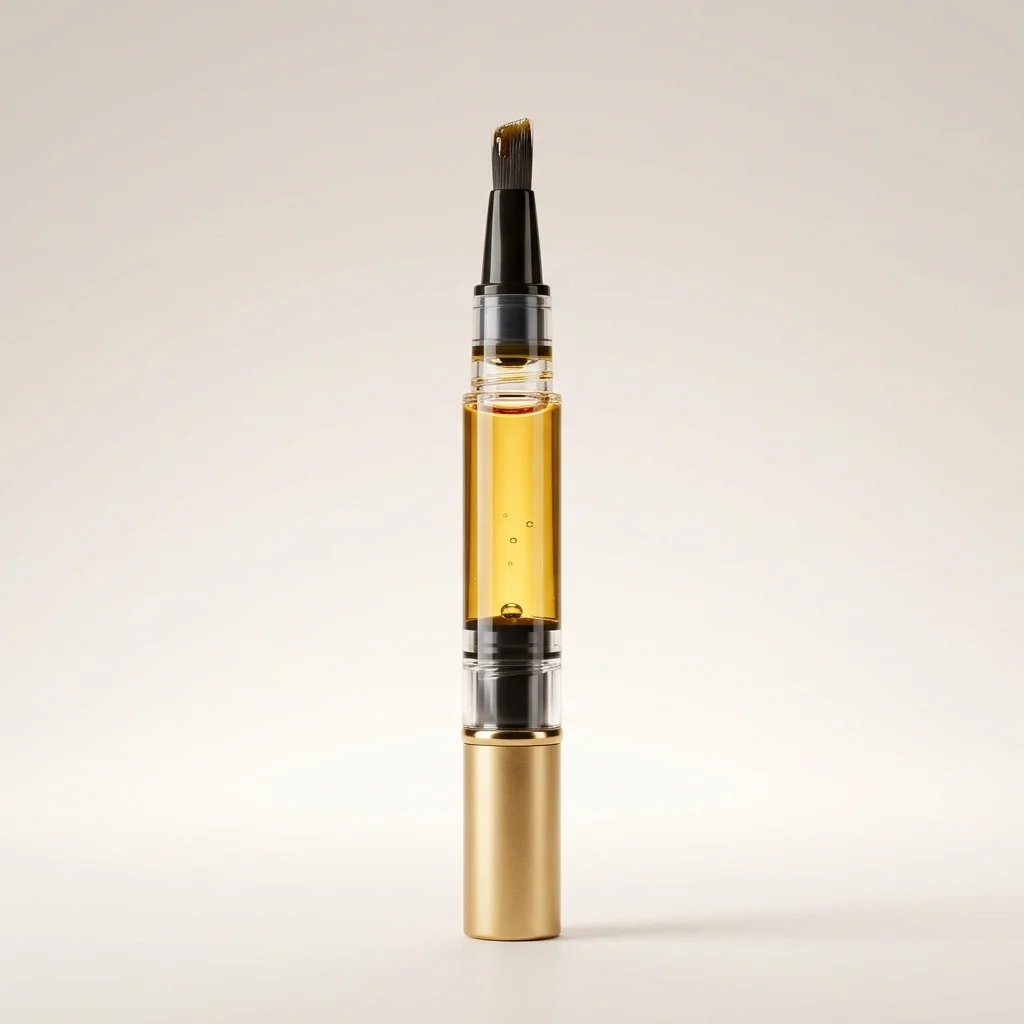
A chrome-effect top product is broader category language. It may be a pearlescent gel, an iridescent top coat, or a polish with reflective pigment in a brushable film. That route can deliver a lovely glazed interpretation, but it does not necessarily reproduce the smooth, rubbed-on effect of powder. Read the product's role carefully: some are designed as top coats, while others are color layers that still need a finishing product.
For traditional lacquer, a jelly polish plus a pearly or iridescent topper is the realistic at-home interpretation. It can point in the same visual direction, but it is not the same method as burnishing loose chrome powder over a gel surface.
What to say at the salon
Specific language helps because the word chrome can mean anything from soft pearl to full silver mirror. A clear request is:
“I want a translucent tea-rose jelly with a fine pearl chrome veil. Please keep it see-through at the free edge and avoid an opaque silver mirror. Can we check the chrome over this color before we do all ten?”
Name the color, the reflective family, and your preferred layer order. If you want the colored-metal version instead, say that you want chrome sealed first with jelly layered over it. It is also useful to mention whether you want a pearl glow, a cool silver flash, a champagne cast, or an iridescent shift. A reference image can clarify the finish, but the request should still describe the level of transparency you are after.
How to adapt the look by length and shape
Short nails
Short nails are well suited to a more edited chrome jelly. Rounded square, round, and short oval shapes have less surface area, so one translucent color pass and a pearl veil can preserve the jelly cue. A dense silver mirror on a short nail may read more like opaque chrome, simply because there is less visible space for color depth.
Medium oval and almond nails
Medium lengths give color and reflection a little more distance from each other. Two sheer jelly layers can be useful if one looks washed out, but correct the color density with jelly rather than adding extra clear layers. An oval or almond shape also works well with a shifted powder because the moving reflection follows the curve of the nail.
Long almond, coffin, and stiletto nails
Longer shapes make the transparent depth feel more architectural. A deeper cola, emerald, inky blue, or wine jelly can hold its own beneath a fine reflective layer. Keep the sidewalls and free edge visually clean; extra material is easiest to spot on longer nails, where a bulky finish can interrupt the glass-like line.
Color and finish directions worth considering
Rose and peach jelly with pearl or champagne chrome create a warm, sheer glow. Lilac, blue, and aqua jelly pair naturally with cool silver, blue-white pearl, or a soft violet shift. Clear beige or transparent pink with a nearly colorless pearl is the quietest version, while cherry and cola jelly under a silvered veil create a more dramatic stained-glass effect.
For a subtle read, choose pearl or opal chrome; the surface catches light without declaring itself as metal from across the room. For a sharper result, select a fine silver or icy mirror powder and use it sparingly. A chrome-jelly French can work, too: keep the base transparent and reserve the stronger chrome for a narrow tip, rather than covering the entire nail in metallic pigment.
At-home options and their limits
At home, chrome jelly is a project in compatibility. Powder, a chrome-ready surface layer, a jelly gel, and a lamp are not interchangeable simply because they are all marketed for gel manicures. A test swatch is useful before a full manicure because it shows whether the powder reads pearly, mirror-like, patchy, or nearly invisible over your chosen color.
- Start with a base, jelly color, no-wipe surface product, powder, and sealing product that identify their intended use. Test the exact color-and-chrome pairing on a swatch.
- Build the jelly in even, controlled layers. Our guide to applying thin gel polish coats explains why the color layer is the place to control thickness.
- Once the swatch has the transparency you want, follow the powder system's directions for the surface, application tool, and final seal. Use a small amount of powder first; adding more is easy, while restoring hidden jelly depth is not.
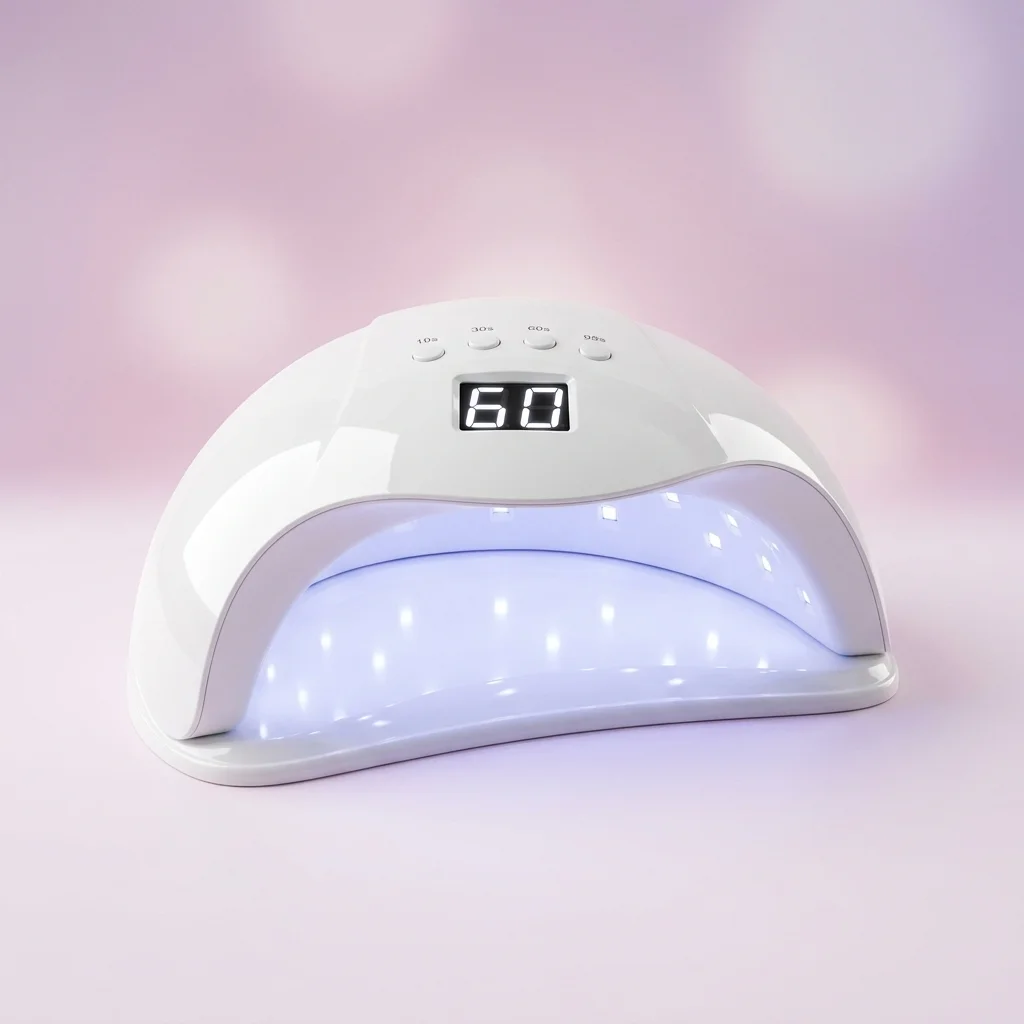
When gel is part of the process, keep uncured gel off skin. Clean accidental contact before cure using the maker's directions, follow the matched product/lamp cure instructions, and stop for irritation or painful heat. If you are sorting through equipment or trying to understand a dull cured surface, see our gel polish starter kit guide and guide to gel-polish curing problems.
If you do not use gel, keep expectations aligned with the materials. A jelly lacquer topped with a chrome-effect polish can create transparent color plus shimmer, but it is a brush-on interpretation rather than a powder-chrome process. For ingredient terminology and product-label context, our HEMA-free gel polish guide is a useful starting point alongside each formula's own directions.
When the finish goes dull, patchy, muddy, or thick
Dull instead of glassy
First identify the intended finish. A pearly chrome-effect product may be diffused by design, so it will not turn into a mirror no matter how much is applied. If a powder swatch that should look reflective reads dull, change one variable at a time: the compatible surface layer, the amount of powder, or the final seal. A thick layer beneath the powder can also make the surface read less crisp.
Patchy chrome
Patchiness can begin with uneven jelly, a product pairing that is not suited to the powder, or incomplete burnishing across the nail. Do not heap extra pigment only onto bare-looking spots; that often creates a different reflection in that area. A swatch can reveal whether the issue begins at the color layer or at the chrome step.
Bulky nails
Bulk usually comes from trying to correct color after the reflective layer is already in place. Instead of stacking another jelly coat, another top coat, and another pass of chrome, decide where the density went wrong and simplify the next attempt. The jelly should create depth, not a thick tinted shell over the nail.
Gray or muddy color
Chrome has its own color cast. A warm gold veil over a cool lilac jelly can shift toward taupe, while a strong silver veil can flatten a delicate peach. If the pairing goes muddy, choose a more transparent powder, reduce the chrome amount, or move toward a chrome undertone that relates more closely to the jelly shade.
If the entire gel build is peeling from the nail rather than the chrome finish merely looking uneven, address that separately before adding more design layers. Our guide to why gel polish peels off can help isolate the prep and application questions involved.
FAQ
What makes a manicure chrome jelly rather than plain jelly?
Chrome jelly keeps translucent color visible while adding a separate reflective layer or chrome-effect veil. Plain jelly relies on gloss alone.
Should chrome go over or under the jelly color?
Chrome over jelly is the clearest classic version. Jelly over sealed chrome creates a more tinted-metal, stained-glass effect.
Can regular polish create chrome jelly nails?
Regular jelly polish plus an iridescent or pearly topper can create a related look, but it is not the same as a powder-burnished gel chrome finish.
Will every no-wipe gel work with every chrome powder?
No. The powder and cured surface need to be compatible, which is why a small swatch test is more useful than assuming similar products will behave the same way.
Can chrome jelly work on short nails?
Yes. Keep the jelly transparent and choose a fine pearl or restrained chrome veil so the color depth remains visible on the smaller canvas.
Chrome jelly rewards editing more than accumulation. On a short soft-square nail, a tea-rose tint and pearl film can look nearly clear until light catches it. On a long almond, blue jelly under silver can lean toward glass sculpture. The ingredients may be the same, but the visual hierarchy is the design.