Some pastel manicures announce themselves from across the room. Lavender milk nails work closer to the hand: a softened violet cast, a diffused white veil, and enough translucency to keep the color from becoming a flat block of lilac. The result is less about finding one exact purple bottle than balancing pigment, base color, and finish with intention.
What lavender milk nails actually look like
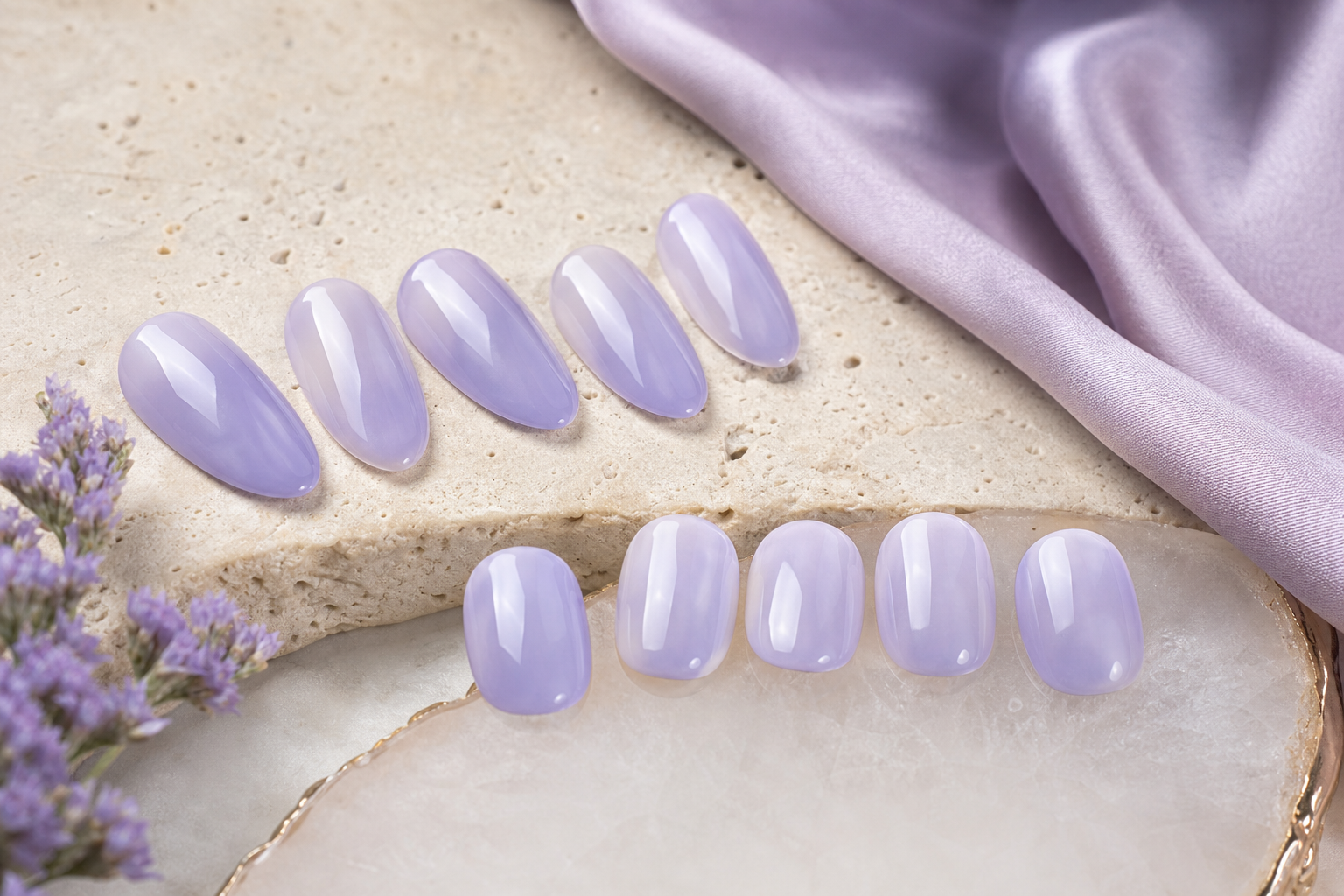
Lavender milk is a sheer-to-soft-coverage purple manicure with a cloudy, milky quality. It should read as lavender at a glance, but it should not look like opaque Easter-egg purple painted over a bright white base. The white element is there to soften and blur the purple; the lavender element gives the manicure direction and color. A glossy top layer helps those translucent layers read as fluid rather than powdery.
A well-balanced version usually leaves some visual depth around the nail plate. That does not mean every natural ridge, free edge, or uneven area needs to remain visible. It means the manicure has a little dimension instead of looking like a single solid pastel surface. The difference is subtle but important: opaque lilac is a cream-color manicure, while lavender milk has the hazy, diluted appearance suggested by its name.
Think of the look as a spectrum. At its sheerest, it is a lavender-tinted neutral. In the middle, it is a blurred pale purple with a creamy center. At its most covered, it becomes soft pastel lavender—but once the purple is completely dense and the white base is obvious, it has moved closer to a standard lilac manicure. None of those outcomes is wrong; they simply create different visual effects.
| Direction | Color and base approach | Coverage target | Finish and visual result |
|---|---|---|---|
| Cool mist | Blue-leaning lavender over a sheer neutral or pink-beige base | A transparent lavender veil with the nail still apparent beneath it | Clear high shine; airy and slightly icy |
| Rose lavender | Lavender with a pink or soft mauve pull over a rosy neutral base | Soft coverage that lightly blurs the nail plate | Gloss or fine pearl; gentler and less stark than a blue violet |
| Muted mauve milk | Gray-lavender over a neutralizing nude base | Medium translucency with a more diffused appearance | Glass-like gloss; understated, shadowed purple |
| High-key lilac milk | Clear pastel lavender over a softly milky, not bright-white, base | More visible color while preserving some haze | Glossy cream-milk effect; brighter and more graphic |
| Pearl lavender | Any of the above with a restrained pearlescent layer | Keep the color sheer enough for the reflect to remain light | Soft sheen rather than glitter; light shifts across the surface |
Choose warm or cool lavender as a styling decision
Undertone language can be useful here, but it does not need to become a rigid set of complexion rules. Cool lavender has a blue, periwinkle, or lightly gray cast. It can make the manicure feel crisp, especially next to silver jewelry, optical white, navy, or pale denim. Warm lavender carries more rose, orchid, or muted mauve. It can sit more quietly beside cream, camel, warm pink, and gold hardware.
The most practical way to choose is to compare the polish against your own hand in daylight and indoor light before committing to all ten nails. A very blue lavender creates stronger contrast on some hands; a rosy lavender can look closer to a neutral with a purple tint. If you prefer the manicure to read as color, select a more distinct lavender. If you want it to function more like a tinted nude, look for a grayer or rosier version rather than simply choosing the palest bottle available.
Opacity, chalkiness, and the base underneath
Milky depth comes from controlled opacity, not from piling on white. A translucent lavender applied over a soft neutral base often looks more dimensional than the same lavender placed over opaque white. Stark white makes purple appear brighter and more pastel, but it can also create a chalky cast. That can be appealing for a deliberately graphic lilac set; it is less useful when the goal is a cloudy, softened manicure.
The natural color of the nail matters because sheer polish works like a filter. A rosy nail plate can make a lavender wash read pinker. A warm or yellow cast at the free edge can mute a blue-violet shade toward gray, beige, or a slightly dull purple. Instead of continuing to add lavender until the color looks heavy, use a light neutralizing or blurring base that suits the result you want. Keep that base thin and even so it does not erase the depth you were trying to create.
Chalkiness usually comes from highly pigmented pastel polish, an overly white base, or unevenly applied layers. A milky manicure should be cloudy, not dusty. If the first coat looks streaky, resist the urge to correct it with a thick second coat. Let the product’s directions guide the layering process, then add a controlled, thin layer that evens the color without turning it opaque.
How nail length and shape change the look
Lavender milk translates well across lengths, but the proportion of color should shift with the canvas. On short round or short oval nails, a sheer wash keeps the look clean and lets the soft purple register without overwhelming the small surface. Rounded-square nails can carry a little more coverage, especially when the corners are gently softened rather than sharply squared.
Medium oval and almond shapes give the lavender room to look more diffuse. A slightly clearer cuticle area and deeper color toward the center or tip can emphasize the layered quality. On longer almonds, coffins, or tapered squares, the free edge may show more strongly through a sheer base, so a soft blurring layer can help the set look cohesive. Longer nails also leave room for a lavender French or an ombré without making each design element feel crowded.
What to say at the salon
Use language that describes both coverage and base color: “I want a lavender milk manicure, not an opaque lilac. Please use a sheer-to-soft-coverage lavender over a milky neutral base, with a glossy finish and visible depth rather than a stark white background.” If you know your preference, add “more blue-toned,” “more rosy,” or “slightly muted mauve.”
It is also reasonable to ask to see the color on one nail before the full set is completed. Shade names are inconsistent from one collection to another, and a swatch card does not always show how a transparent lavender will interact with your nail plate or the chosen base. For a French, shimmer, or ombré version, identify that detail before the color goes on so the coverage can be planned around it.
At-home layering: what works and what does not
For conventional polish, start with clean, dry nails and a base coat chosen for the finish you want. A sheer neutral, pink-beige, or soft milky base can create the blur beneath lavender. Follow with a genuinely translucent lavender or jelly-like purple in thin, even layers, allowing each layer to set according to its maker’s directions. Finish with a clear glossy top coat. If your technique tends to create streaks, the guide to applying thin gel-polish coats is also useful for understanding the light-touch, controlled application that sheer colors need.
A fully opaque lavender cream does not reliably become a jelly just because it is brushed on lightly. It may streak, drag, or leave random dense patches. If opaque lavender is all you have, it is often better suited to a micro-French, a small accent, or an intentionally solid lilac manicure. Layer products rather than mixing unrelated formulas together in a bottle, and test the color combination on one nail first. The base can change the final purple more than expected.
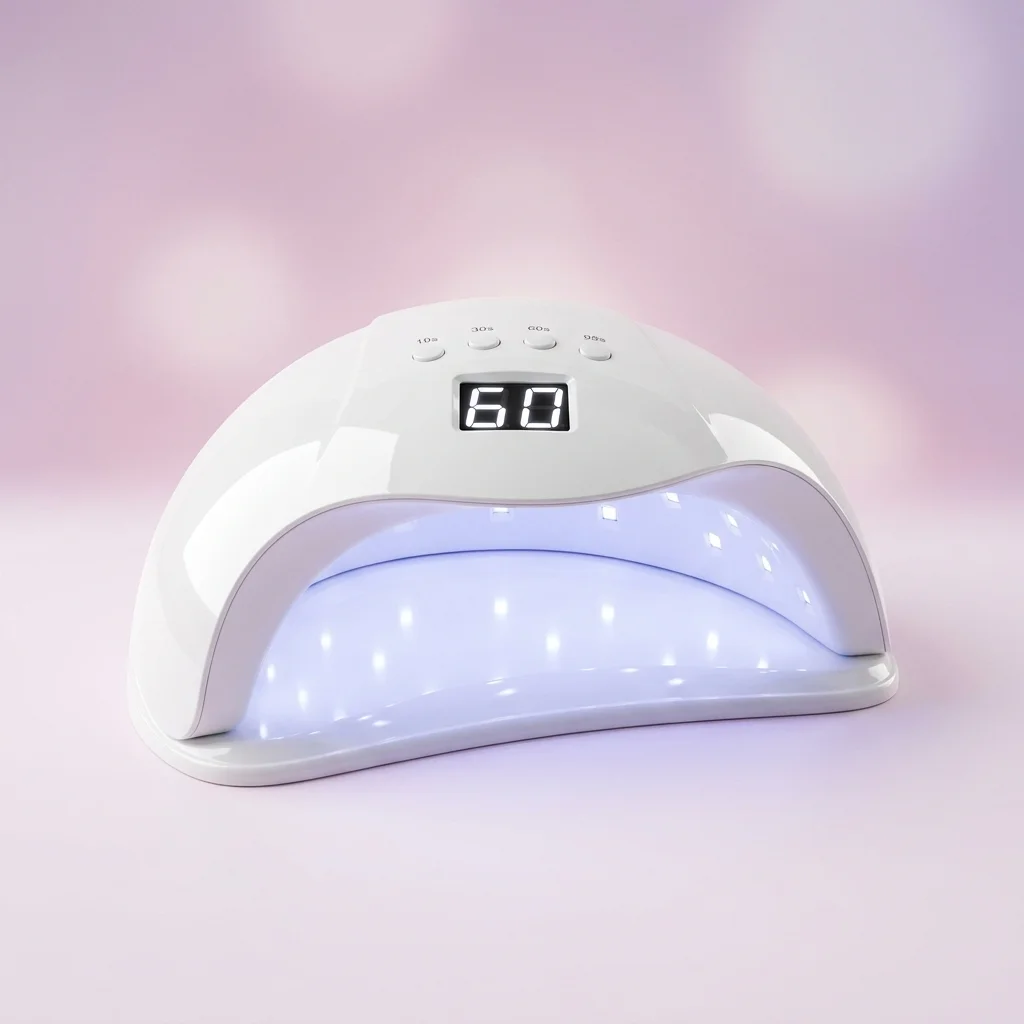
Gel can create the same layered look, but it requires careful product handling. Keep all uncured gel off the skin. If color reaches the cuticle or sidewall, clean the accidental contact before curing according to the maker’s directions; do not place a messy layer under the lamp. Follow the matched product-and-lamp cure instructions rather than borrowing timing from a different system, and stop if there is irritation or painful heat. If a layer remains wrinkled, dull, or otherwise seems improperly set, review common gel-polish curing problems before adding more product. Those choosing gel based on ingredient preferences can also consult this HEMA-free gel polish guide.
Five ways to vary lavender milk nails
- Plain lavender milk: Keep every nail in the same translucent lavender range. This is the clearest expression of the balanced purple-and-white idea.
- Micro-shimmer lavender: Choose fine pearl or mica-like shimmer rather than visible glitter particles. The shimmer should alter the light on the surface, not obscure the milky color below.
- Lavender milk French: Use a transparent pink or neutral base with a narrow lavender tip, or keep the full nail milky lavender and add a slightly deeper purple micro-tip for definition.
- Soft lavender ombré: Fade from a neutral, milky cuticle area into lavender near the free edge. The transition should be hazy rather than sharply airbrushed.
- Pearl chrome veil: A restrained pearl chrome can bring a pale lilac manicure closer to opalescent than metallic. It works best when the underlying lavender remains visible; a dense chrome layer can turn the color silver or icy blue.
Wardrobe pairings, without color rules
Lavender milk does not require an all-pastel wardrobe. It can echo the blue in denim, add a soft note beside black tailoring, or sit quietly against white cotton and gray knits. Silver jewelry tends to underline a cooler lavender, while yellow gold can make a rose-lavender feel warmer by comparison. Cream, chocolate brown, forest green, burgundy, and printed florals can all work if the manicure is treated as one small color note rather than a perfect match.
If you like a coordinated approach, repeat either the coolness or warmth of the lavender elsewhere: a blue-gray bag with cool mist nails, for example, or a mauve lip tint with rose lavender. If coordination is not your preference, the manicure can simply be the soft purple interruption in an otherwise neutral outfit.
Mistakes to troubleshoot before changing the whole color
- It looks chalky instead of milky. The white base may be too opaque, or the lavender may be a high-pigment cream. Remove one layer from the plan, use a softer neutral base, or choose a more translucent purple.
- It looks gray, beige, or slightly yellow. The nail plate and base are visually mixing with the sheer color. Test a neutralizing base on one nail rather than applying additional purple across the entire set, which can turn the manicure darker without solving the undertone issue.
- It is streaky. Sheer colors reveal brush marks when the layer is too dry, too thick, or repeatedly brushed over as it starts to settle. Use a deliberate, light application and allow the previous layer to set as directed before assessing coverage.
- The lavender disappears. Choose a more saturated sheer lavender, not necessarily an opaque pastel. A little more color in the formula can show up better while preserving the translucent effect.
- The manicure looks unfinished. Lavender milk relies on a smooth, glossy surface. If you intentionally choose matte, expect the effect to shift toward a velvety pastel rather than a glassy milk manicure.
- Gel is lifting or separating. That is an application and preparation question, not a reason to add extra coats of color or top coat. Review the likely causes in our guide to why gel polish peels off and follow the instructions for the specific system being used.
Lavender milk nails FAQ
Are lavender milk nails the same as lilac nails?
No. Lilac nails are often opaque cream pastels. Lavender milk nails use softened opacity and a milky base effect, so the color has more haze and depth.
Can lavender milk work on short nails?
Yes. A sheer lavender wash on short round, oval, or rounded-square nails keeps the color proportionate. A narrow French tip is another useful option when there is enough free edge.
Can I do the look with regular polish instead of gel?
Yes, provided you have a translucent lavender and a suitable neutral or milky base. Regular polish may require more testing because formula opacity varies widely from shade to shade.
Will a pearl chrome change the lavender color?
It can. Pearl finishes often cool or brighten the base color depending on the powder and lighting. Keep the chrome light if preserving the lavender tone is more important than achieving a strong metallic reflection.
Lavender milk is most convincing when it keeps a little ambiguity: purple, but softened; milky, but not blanked out; polished, but not overly engineered. Once the base and opacity are tuned to your preferred version of lavender, the manicure has enough nuance to stand on its own. For more color and finish ideas, browse the broader nail trends collection.