
French tips are best treated as a composition rather than a single finish. The familiar contrast between a clear or softly tinted base and a shaped edge can become narrow, graphic, tonal, irregular, glossy, reflective, or deliberately quiet. This visual planning hub?not a technique tutorial or a ranking of temporary trends?gathers 33 distinct editorial directions for 2026 across short, square, almond, coffin, oval, colored, white, black, red, blue, pink, green, brown, floral, glitter, chrome, and toe-focused ideas. The concepts are references for choosing a mood, silhouette, palette, and level of detail before an appointment or personal design session. They are not arranged as a ranking and are not technique instructions.
Start with geometry. A short square canvas makes the front edge and sidewalls part of the design, while almond and oval shapes give the tip a more tapered or rounded setting. Coffin shapes support broad blocks and horizontal divisions. Once the silhouette is selected, compare the line treatment, then the palette, and finally any reflective or decorative accent. This order keeps the mood board legible and helps separate the core French idea from optional embellishment.
For a compact 2026 French tip mood board, pair a short or square silhouette with one controlled tip color, a translucent base, and one finish change such as chrome, glitter, or a floral mark. For a softer reference, compare milky white, pink, or almond-toned bases. For a sharper board, compare black, red, blue, or green tips against a sheer base. Use the numbered concepts below to choose the line, shape, color, and detail as separate decisions.
Quick answer: choose one silhouette, one tip proportion, one palette, and one optional finish. Browse the numbered galleries by short, square, almond or toe canvas, then compare white, black, red, blue, pink, green and brown tips with floral, glitter and chrome details.
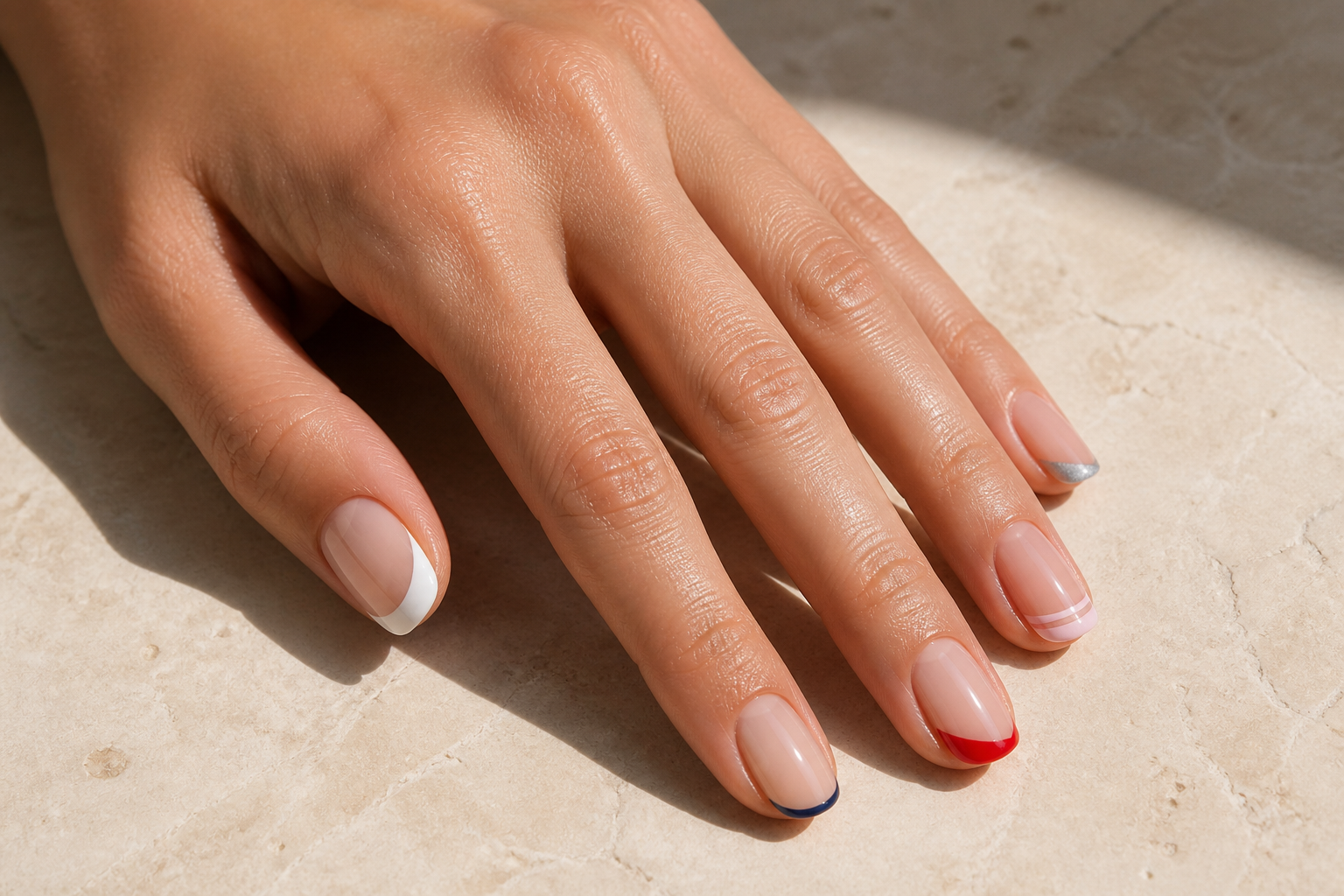
Line Study 1-7
1. The Classic White Crescent
Begin with the familiar French arrangement: a clear, blush, or milky base and a white crescent at the free edge. The central planning choice is proportion. A slim crescent leaves more base visible, while a fuller band becomes the dominant graphic element. On a short canvas, keep the reference compact and let the white occupy a deliberate visual band. This quiet direction gives the rest of the gallery a useful point of comparison.
2. Micro-Line White Tips
A micro-French reference reduces the white edge to a fine trace around the nail perimeter. It suits a mood board built around negative space, low contrast, and a close relationship between the base and outline. The line may appear continuous or slightly interrupted by the curve. For a more focused visual collection, compare this concept with the micro-French nails guide while keeping this page centered on planning.
3. Double White Arc
Two white arcs create a layered French tip without introducing a second color. One line can sit at the edge while another floats slightly inward, leaving a narrow strip of base between them. On a square reference, the sidewalls and front edge place the spacing in clear view. A finer inner line beside a fuller outer band gives the composition hierarchy without requiring flowers, glitter, or a change of palette.
4. Angled French Edge
Let the tip travel diagonally from one sidewall toward the opposite corner instead of following a symmetrical smile. The resulting slash can be white, black, red, or metallic. It adds movement while keeping the design graphic and restrained. Compare the same direction on every nail with alternating angles. Repetition creates a printed effect; alternating directions create a more assembled editorial board.
5. Sidewall French
Move the strongest line from the front edge toward one sidewall. A narrow band can climb the left or right side, turn across the tip, and stop before completing a full smile. This partial outline offers a quiet alternative to a centered crescent. On a short square reference, the turn can echo the corner. On an almond or oval reference, let the band visually taper as it approaches the point.
6. Reverse Crescent
Turn the French arrangement around by placing contrast near the cuticle while leaving the free edge relatively open. The reverse crescent can be white over pink, black over a nude base, or metallic over a sheer wash. A shallow curve creates a minimal reference; a broad curve becomes the principal graphic mark. This concept preserves French vocabulary while changing the location of the strongest division.
7. Broken Outline
A broken outline uses separate marks rather than one uninterrupted tip. Imagine short sidewall lines connected by a central dash, or three segments following the perimeter with visible gaps. The open spaces make the base part of the design. Keep spacing related across the set, but allow small differences in length so the reference does not look like a rigid diagram. It bridges classic French planning and abstract line work.
Color Library 8-15
8. Milky White on Sheer Pink
Pair a translucent pink foundation with a soft white tip for a tonal version of the classic. The base may remain visibly sheer or become a cloudier wash. Compare cool milk with warm cream, then decide whether the tip should stay narrow or become a fuller band. For another visual reference, see the milky French tips trend guide.
9. Black and Nude Graphic Tips
Black tips sharpen the French silhouette. Against a nude or transparent-looking base, the edge may be narrow and outlined or broad and block-like. A square nail makes the band feel architectural, while an almond canvas gives it a tapered finish. A matte-looking base with a glossy-looking edge creates a surface contrast in the mood board; matching finishes create a cleaner graphic field.
10. Cherry Red Crescent
Red turns the French tip into a focused accent while preserving the familiar layout. True cherry, deep wine, and warm tomato versions create different visual temperatures. Keep the base sheer so the color remains central. One repeated curve is often enough for the concept; additional red decorations can be reserved for a separate direction so the French division stays visible.
11. Cobalt Blue Edge
Cobalt gives the tip an inked, graphic quality. It can sit on a clear base for strong separation or on a powder-blue wash for a tonal arrangement. On short square nails it feels compact and poster-like; on almond nails it follows the taper toward the point. Compare a bright blue with a pale companion shade if the board needs variation without a crowded palette.
12. Blush Pink-on-Pink
Use two pinks to make the French division gentle: a translucent rose base with a stronger bubblegum, dusty, or ballet-pink edge. The concept depends on close color values and a visible boundary. A fine tip keeps the palette airy; a broad band turns the same colors into playful color blocking. One white accent can punctuate the set, but an all-pink reference keeps the direction more cohesive.
13. Moss and Pistachio Green
Green tips can be muted, light, or jewel-toned without changing the French structure. Moss creates an earthy reference, pistachio adds freshness, and emerald gives the edge deeper color. Keep the base neutral when the tip is saturated. A two-green board may alternate shades or use one shade on an accent nail. Garden and seasonal associations can guide the palette without becoming requirements.
14. Cocoa Brown and Caramel
Brown creates a warm, grounded French tip. Cocoa over caramel produces a tonal composition, while espresso against a milky base feels more graphic. The palette suits curved oval and almond references as well as square shapes. If tortoiseshell is included in the board, treat it as a separate accent direction and consult the tortoiseshell nails guide rather than combining every pattern into one concept.
15. Seasonal Palette Switchboard
Keep one French layout stable and explore it through palettes: icy blue and silver, coral and pink, jewel tones, or black and gold. The exercise compares color behavior while preserving the line and base. It prevents an occasion from dictating every design decision. A switchboard can reveal whether the chosen shape belongs with a slim edge, a wide band, a partial outline, or a decorative finish.
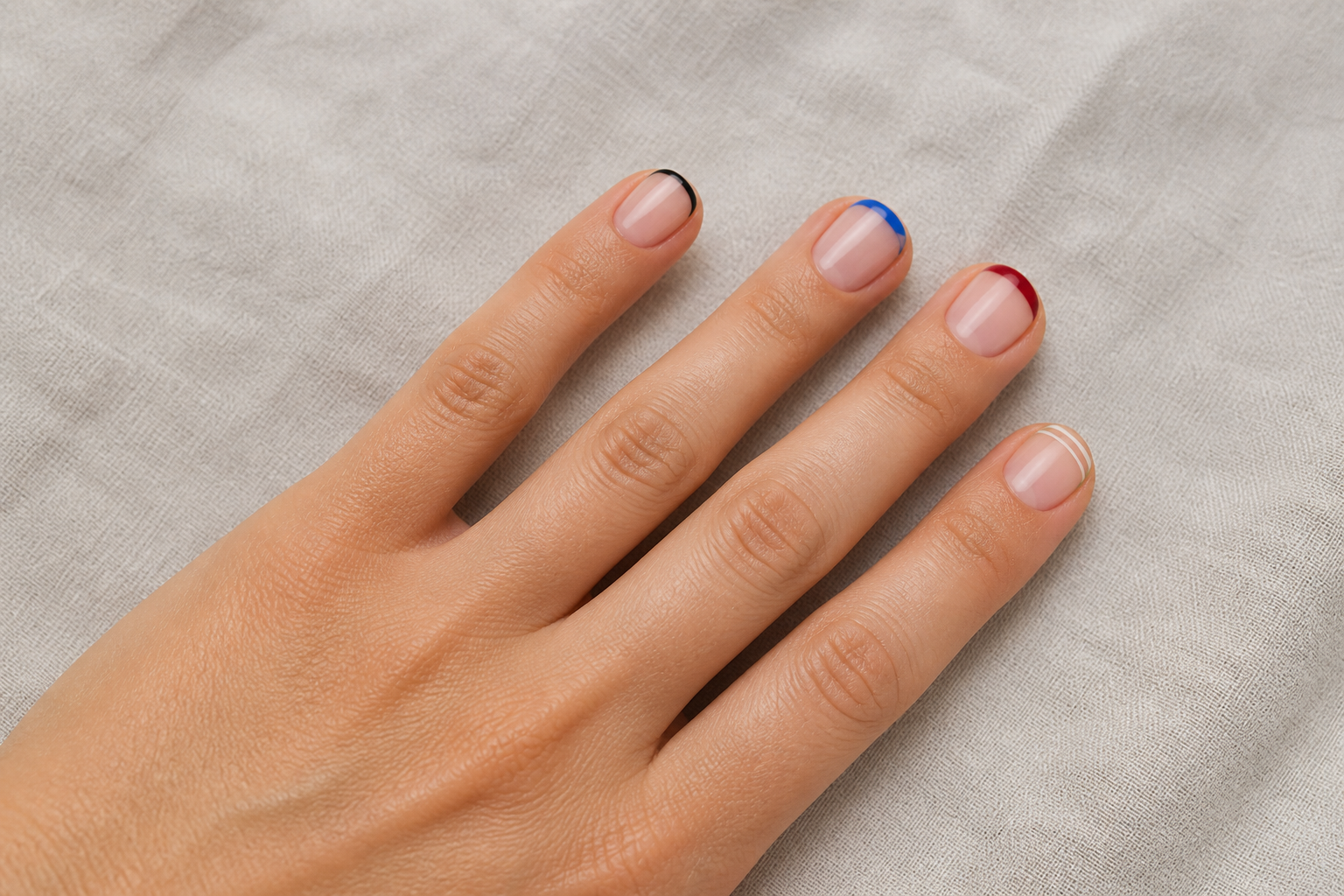
Shape Room 16-22
16. Short Square White Tips
Short square nails provide a small, structured canvas. The straight front edge can carry a crisp white band, while the corners keep the composition geometric. Compare a narrow line with a wider block and note how much base remains visible. This direction anchors the gallery because its proportions can be translated into almond, oval, and coffin references without changing the central white-and-base relationship.
17. Soft Square Pink Tips
A soft square shape rounds the corners and changes the tone of the same French layout. Pink tips can follow the softened outline, creating a shape-within-shape effect. Compare a pale pink base with a stronger rose edge against a clear base with a translucent pink band. The reference can foreground the corner treatment and the beginning of the tip.
18. Almond White-to-Color Tips
Almond nails provide a tapered canvas for a tip that narrows toward the point. A white edge can shift into one color at the center, or one side of the tip can be colored while the other remains white. The same smile line changes character as it approaches the point. Use the coffin versus almond shape guide when the silhouette remains undecided.
19. Almond Blue Outline
Trace the almond perimeter with blue while leaving the interior close to the base color. The open center keeps the design light and makes the taper explicit. Bright blue creates a gallery-like reference; navy or denim blue gives the same structure a quieter mood. One white nail or a blue accent can accompany the outline, but the perimeter remains the principal cue.
20. Coffin Block French
Coffin nails support a broad, horizontal tip because the front edge presents a wider visual field. Imagine white, red, or black occupying the end of the nail with a straight division from the base. A translucent base softens the block, while high contrast makes it more graphic. The shape does not require maximum decoration; the clean division can be the complete idea.
21. Oval Brown Half-Moon Tip
On an oval canvas, a brown edge can follow the rounded end in a gentle half-moon. Leaving part of the perimeter open creates a visual pause. A sheer beige or milky base keeps the warm palette cohesive. Compare this curved direction with a square version to see how the same brown band becomes softer on an oval and more constructed on a structured silhouette.
22. Shape Sampler Set
Make the silhouette the subject by placing the same white French arrangement on short square, almond, coffin, and oval references. Keep palette, line width, and finish constant so only the canvas changes. This is not a recommendation for one shape; it is a visual sampler. For additional shape context, consult the nail extension types comparison.
Geometry planning index: short canvases suit compact bands and open space; square shapes support straight fronts and blocks; almond shapes support tapered outlines; coffin shapes support broad horizontal divisions; oval shapes support rounded arcs and half-moons.
| Planning axis | Quiet direction | Graphic direction | Decorative direction |
|---|---|---|---|
| Line | Micro crescent | Angled block | Broken outline |
| Palette | Milky white | Black or cobalt | Red, green, or brown accents |
| Shape | Oval | Short square | Almond or coffin |
| Finish | Soft gloss | Chrome contrast | Glitter or floral detail |
Detail Desk 23-29
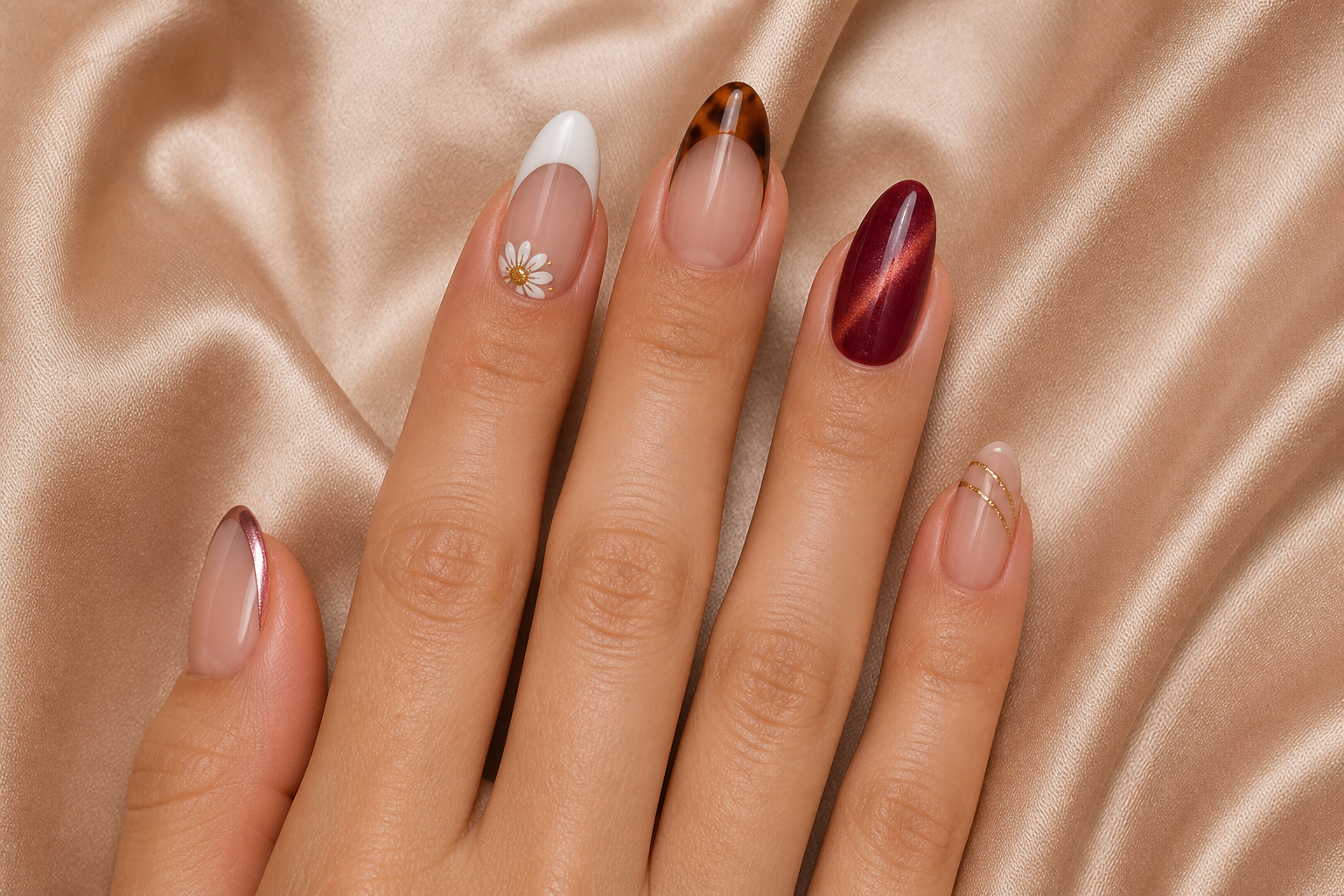
23. Chrome French Flash
Chrome changes the tip from a flat division into a reflective accent. Silver over milky white keeps the reference cool, while rose, gold, or blue chrome shifts the palette. Use a full chrome band for a strong graphic direction or an outline for more visible base space. The broader finish family appears in the chrome jelly nails guide; here, decide whether reflection fills or traces the tip.
24. Glitter Underline
Place a narrow glitter line beneath a white or colored French edge, leaving the base visible between accents. Fine silver glitter creates a quiet light-catching reference; multicolor glitter makes the same layout more festive. The underline may follow the curve or appear only at the center. Reduce the upper tip if glitter should lead, or keep it subtle if the French line should remain primary.
25. Glitter-Tipped Transparency
Replace an opaque tip with a translucent glitter veil. The base stays part of the composition while reflective particles define the edge. Compare clear, pink, champagne, and blue-tinted versions. Fine shimmer creates an atmospheric wash; larger flakes create visible points. Both belong in the same planning family, but they should not be treated as the same visual language.
26. Tiny Flower French
Use miniature flowers as interruptions along a simple French edge. One pink flower near a sidewall or two tiny petals at the center can change the mood without covering the line. Keep the marks sparse enough for the French structure to remain visible. The flower works as punctuation rather than a replacement for the tip. A restrained palette foregrounds the relationship between line and motif.
27. Petal-Tip French
Turn the tip itself into a row of rounded petals rather than a continuous crescent. White petals over pink create a soft floral edge; red or blue petals make the idea more graphic. Compare petal count, spacing, and scale. On a short canvas, several broad petals may read more clearly than a crowded border. On almond references, a central petal can echo the tapered point.
28. Cat-Eye French Edge
Give the tip a cat-eye-inspired directional glint while keeping the base calmer. A dark green, brown, blue, or red edge can carry a diagonal highlight. The separate finish family is explored in the cat-eye nails guide. For this mood board, decide whether the reflective streak follows the smile, crosses it, or sits parallel to the free edge.
29. Mixed-Finish Accent Nail
Keep most nails in one French language and reserve one accent nail for a finish shift. White tips can become chrome on one nail; pink tips can receive one flower; black tips can gain one glitter outline. Repeat an existing color so the accent remains connected. This direction previews decoration without making every nail carry every element.
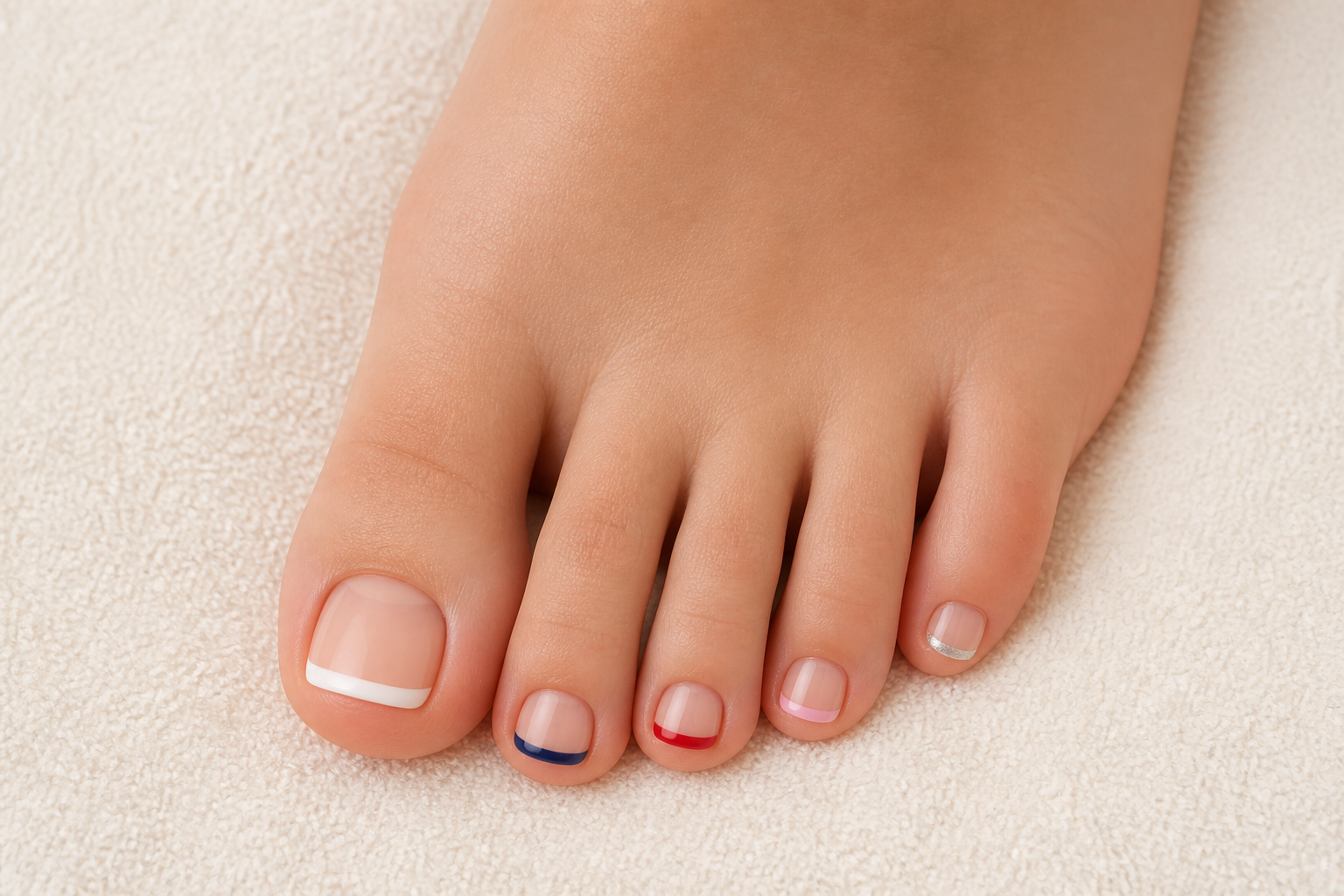
Hands to Toes 30-33
30. White French Toes
For a toe-focused reference, reduce the design to a white edge over a sheer, pink, or milky base. The largest toenail can carry the clearest version while smaller nails use a coordinated color or simpler finish. Keep the board centered on the painted area, palette, and relationship between toes rather than adding claims about results. The direction can echo a hand set without copying every line.
31. Colored Toe Set
Use red, blue, pink, green, or brown as the toe tip color and keep the base quiet. One color creates a deliberate block; two related shades create a small palette library. Winter, summer, evening, or event references can guide the colors, but they remain mood cues. The cosmetic composition is the focus: decide how much of the largest toenail should carry the tip and how the smaller nails repeat it.
32. Hand-and-Toe Echo
Repeat one visual cue across hands and toes rather than copying the whole manicure. A cobalt hand tip can become a cobalt toe crescent; a floral hand accent can become one petal on the largest toe; a chrome outline can become a small metallic toe edge. One shared color or finish is enough to connect the canvases while allowing each area to keep its own proportions.
33. Event-Ready French Diptych
Plan a paired hand-and-toe board around white and silver, black and red, pink and chrome, or deep green and gold. Hands may carry the more articulated line while toes use a simplified version. A diptych layout can show silhouette, base tone, tip color, and one optional finish together. Keep the event reference atmospheric and adaptable rather than prescriptive.
Choosing a Reference
Circle one line study, one color direction, and one shape. Then decide whether the finish should remain plain or move toward chrome, glitter, flowers, or a cat-eye-inspired glint. If the board feels crowded, remove detail before changing the fundamental layout. A clear reference usually has an order: silhouette first, tip division second, color third, and accent finish last.
For adjacent planning, compare the compact geometry here with the Italian manicure short-nails guide. The short square nails guide can narrow the shape reference, while the French tip nail shapes guide can help organize line and silhouette choices. These related guides remain separate from the numbered gallery.
Which French tip concept is the most minimal?
Concept 1 records a classic white crescent with a quiet base, one white edge and an uncomplicated silhouette.
Which concepts use short-nail references?
Concepts 1, 2, 6, 8, 16, 17, and 29 use compact references, though any direction can be redrawn with a narrower tip and fewer decorative marks.
How can square and almond tips be compared?
Use concept 22 as a sampler. Keep palette, line treatment, and finish constant while changing only the silhouette.
Can French tips include chrome, glitter, or flowers?
Yes. Concepts 23 through 29 treat those elements as optional finish and detail directions. Keep one change dominant if the French line should remain the first cue.
How should toe designs relate to a manicure?
Repeat one shared color, finish, or small motif rather than copying every hand detail. Concepts 30 through 33 show ways to coordinate the two canvases.
This page is a visual reference hub, not a technique tutorial or ranking. Bring the selected concept, shape, palette, and finish notes into the next design conversation so the composition can be adapted to the intended canvas.
